The Quantified Human
To Measure the Human Body Is Science. To Mistake Measurement for Truth Is the Beginning of Violence.
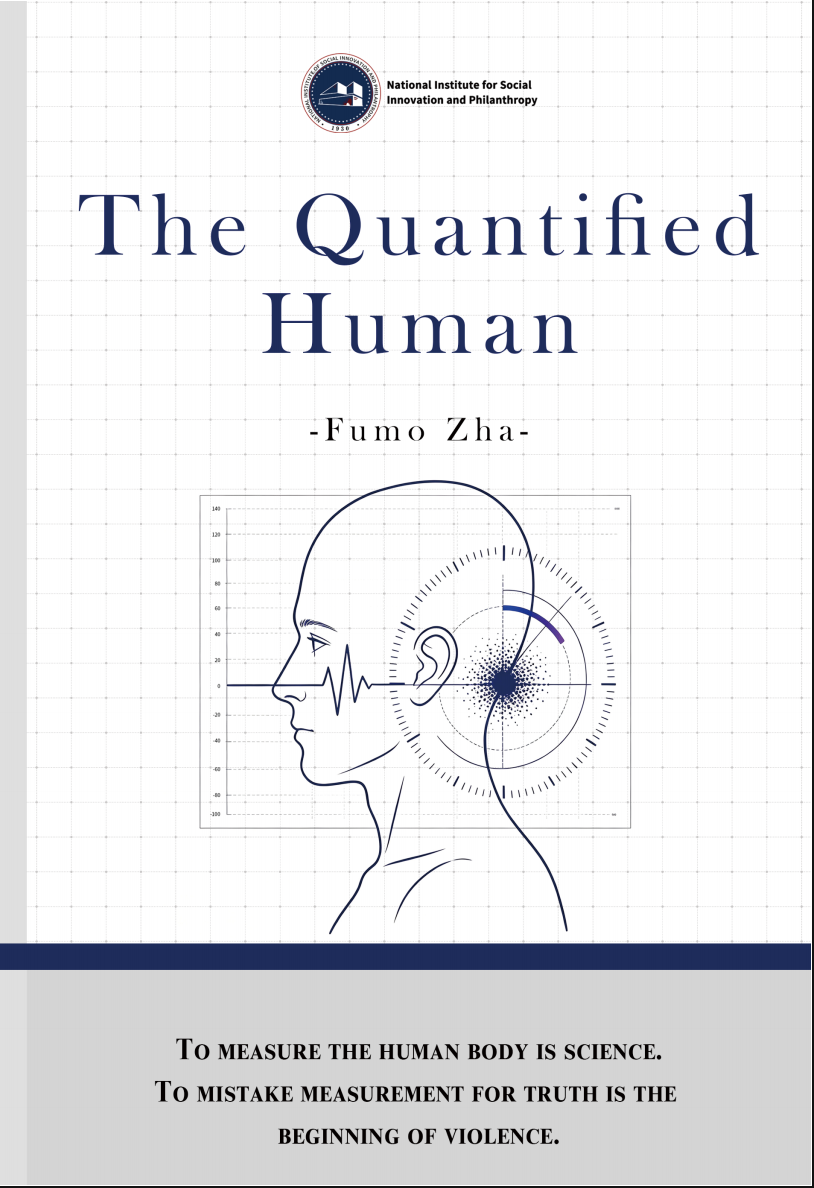
Book Overview
When does measurement become a definition of who a person should be?
The Quantified Human examines how statistical averages became standards of human worth, and how medicine, education, and society can recover a more humane understanding of biological difference.
Body temperature, blood pressure, BMI, intelligence scores, developmental milestones, psychiatric classifications, and genetic risk profiles can illuminate genuine danger. Yet averages can also become social expectations: variation becomes deviation, difference becomes risk, and people are treated as problems to be corrected.
This is not an argument against medicine or scientific precision. It is an argument for using them more carefully, with context, judgment, dignity, and compassion.
Core Thesis
Normality is not simply discovered. It is constructed.
Statistics are powerful tools for understanding populations, but they are incomplete judges of individual human life. The book distinguishes genuine illness from harmless variation and asks how science can inform judgment without replacing it.
Normality is made, not found. Statistical description became social expectation.
Measurement is a tool, not a moral order. A number cannot contain the whole truth of a life.
Healing differs from correction. Medicine should relieve suffering, not enforce conformity.
Human variation is biological strength. Diversity enables creativity, resilience, and adaptation.
Structure of the Book
From the invention of normality to a humane biological future
The book moves from the historical creation of the average human, through the institutional enforcement of modern standards, to a framework that reconciles scientific progress with human complexity.
Part One
- Before Normality: When Human Difference Was Unquestioned
- How bodies were understood before universal numerical benchmarks
- When the average became an ideal
Part Two
- The Construction of Modern Human Standards
- Vital signs, BMI, growth charts, diagnosis, and genetic screening
- Where reference ranges become too rigid
Part Three
- The Social Violence of “Normality”
- How numbers enter schools, workplaces, families, and self-perception
- When natural difference becomes moral failure
Part Four
- Redefining Normality: Toward a More Humane Biological Future
- Health as context, adaptive capacity, autonomy, and freedom from suffering
- Beyond the fictional average
A New Definition of Health
Health is not statistical obedience.
A more humane understanding of health asks whether an individual is suffering, whether meaningful dysfunction exists, whether there has been a change from that person’s own baseline, and whether intervention expands a life or merely makes it more socially conventional.
It separates danger from harmless difference, suffering from inconvenience, and treatment from social correction. Human health can take more than one form.
Author Profile
Fumo Zha
Fumo Zha is an incoming Grade 12 student at Shenzhen College of International Education. Her work explores the intersection of biology and the humanities, asking how scientific categories shape the understanding of bodies, minds, and identity.
Her interests include biology, mental well-being, student leadership, artistic organization, and community service. Through this book, she brings biological inquiry together with humanistic empathy.
Editorial Note
Beyond the average lies the human being.
Modern medicine has reduced suffering and expanded life. Its humane purpose is strengthened, not weakened, when a reference range guides inquiry rather than ending it, and when diagnosis opens a path toward care rather than imprisoning a person inside a label.
Published by National Institute for Social Innovation and Philanthropy Press · First Edition · June 2026