MIT News On October 7, 2026, MIT News reported that MIT researchers developed SANDO, a navigation method designed to plan UAV flight paths that avoid collisions in unfamiliar environments with moving obstacles. The system addresses a challenge in autonomous flight: creating safe trajectories when obstacles are not known in advance and may change position over time.
Safety Planning for Unknown Dynamic Environments
MIT News The research focuses on uncrewed aerial vehicles operating in situations where traditional navigation approaches may face limitations. MIT described possible applications including search and rescue missions in collapsed buildings, mine exploration through hidden tunnels, and package delivery across crowded neighborhoods. These examples indicate potential relevance for disaster-response and public-interest robotics, although the evidence packet does not establish deployment in these settings.
MIT Newsgithub.com SANDO, which stands for “Safe AutoNomous trajectory planning for Dynamic unknOwn environments,” was developed as a trajectory planner that uses onboard camera and sensor information to chart paths through unmapped environments. The system is intended to handle both static and dynamic obstacles, including previously unseen obstacles detected during operation.
MIT News According to the reported research description, many existing navigation systems provide formal safety guarantees only when environments are static or obstacles are known beforehand. The researchers used a mathematical approach to prove that SANDO can compute trajectories designed to avoid collisions with moving obstacles in unknown environments, based on information about the maximum possible obstacle velocity.
Combining Mathematical Guarantees and Real-Time Replanning
MIT News SANDO creates a time-sensitive safety corridor, a connected region of three-dimensional space through which a UAV can travel while accounting for possible future obstacle movement. The system estimates how far an obstacle could move within a given period by using its maximum velocity and incorporates this estimate into the safety corridor design.
MIT Newsgithub.com The planner combines several components, including dynamic obstacle detection and monitoring, heat-map-based planning, safety corridor generation, and trajectory optimization. The GitHub project description identifies related technical elements such as spatiotemporal safe flight corridors, dynamic heat maps, and local trajectory optimization using a solver-based approach.
MIT News The research team reported simulation results in which SANDO reached goals faster than several state-of-the-art systems while avoiding collisions in the tested environments. The system was also tested in 12 real UAV flights, where it used onboard computing resources and sensors to repeatedly calculate safe trajectories. These results demonstrate reported experimental performance, but they do not establish performance across all real-world conditions.
Implications and Remaining Research Questions
MIT News Reliable autonomous navigation has implications for fields that require robots to operate in complex or hazardous environments. For researchers, educators, and organizations interested in technology for public benefit, systems that combine formal safety analysis with autonomous decision-making represent one approach to improving reliability in high-risk robotic applications.
MIT News However, the available evidence does not show that SANDO has been adopted for operational disaster response, medical delivery, or other public deployments. The reported work remains a research development, and further evaluation would be needed to understand factors such as scalability, computational efficiency, environmental diversity, and long-term reliability.
MIT News The researchers identified future directions including improving computational efficiency and combining the system with machine-learning models that could allow users to provide instructions to robots through plain language. The evidence supports these as future research possibilities rather than completed capabilities.
Sources
- Planning system ensures a robot’s flight path will remain collision-free — MIT News (2026-10-07)
- SANDO: Safe Autonomous Trajectory Planning for Dynamic Unknown Environments — github.com
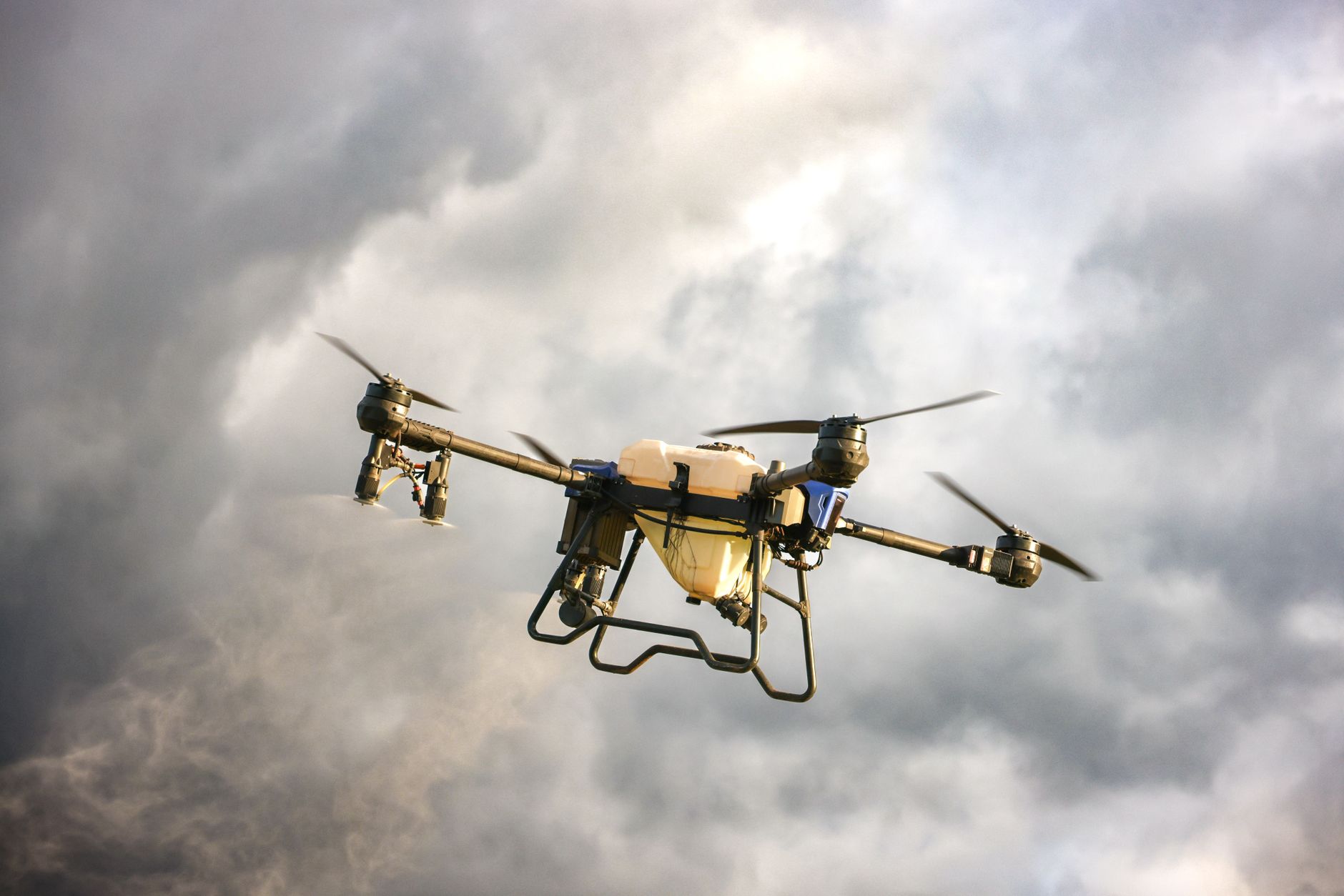
Illustrative stock photograph. Photo: Magda Ehlers / Pexels. Photo source.