
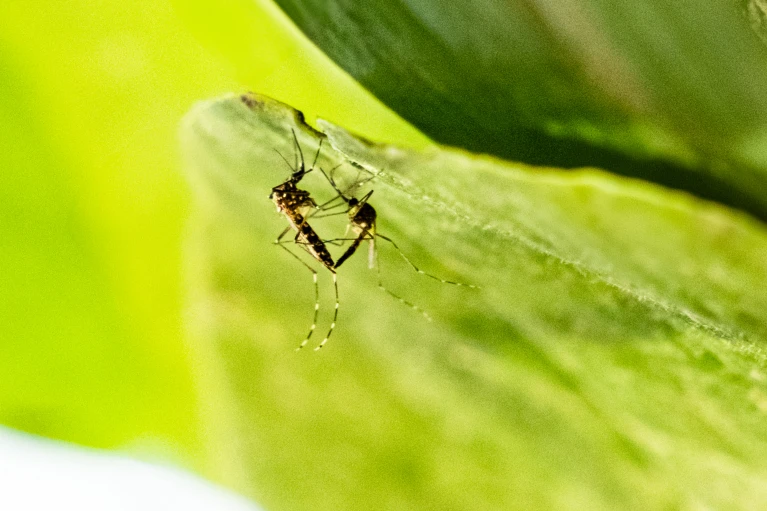
Contrary to long-standing assumptions, female mosquitoes that spread diseases such as dengue, Zika, and chikungunya are not passive during mating. In fact, they appear to hold the ultimate control, according to a groundbreaking study by Leslie Vosshall, a neurobiologist at Rockefeller University in New York City, and her team. The research challenges the traditional view that males dominate mosquito sexual interactions and offers potential new insights for controlling disease-transmitting mosquito populations.
Vosshall and her colleagues were intrigued by a paradox in mosquito behavior: males of the Aedes genus relentlessly pursue females, yet most females mate only once in their lifetime. “The question was: how are the females able to say no?” Vosshall explains. To answer this, the team developed an innovative approach combining high-resolution video and fluorescent markers to observe the mating process at an unprecedented level of detail.
Female Control in Action
Using specially engineered male mosquitoes that produced fluorescent sperm in either green or red, the researchers conducted experiments to track mating outcomes. Female mosquitoes were placed in cages with males of both types for a week. Upon dissection, over 90% of females contained sperm of only one color, confirming that female Aedes aegypti—the primary dengue vector—typically mates just once in her lifetime.
In parallel, Vosshall’s team designed a high-precision filming setup to visualize mating mechanics. Female mosquitoes were attached to fine metal pins, allowing free movement of wings and legs while preventing flight. Free-flying males were then introduced, and interactions between male and female genitalia were captured in high definition. This method allowed researchers to observe behavior that is normally too fast and subtle to detect: mosquito mating usually lasts only a few seconds and often occurs mid-air, making detailed observation challenging.
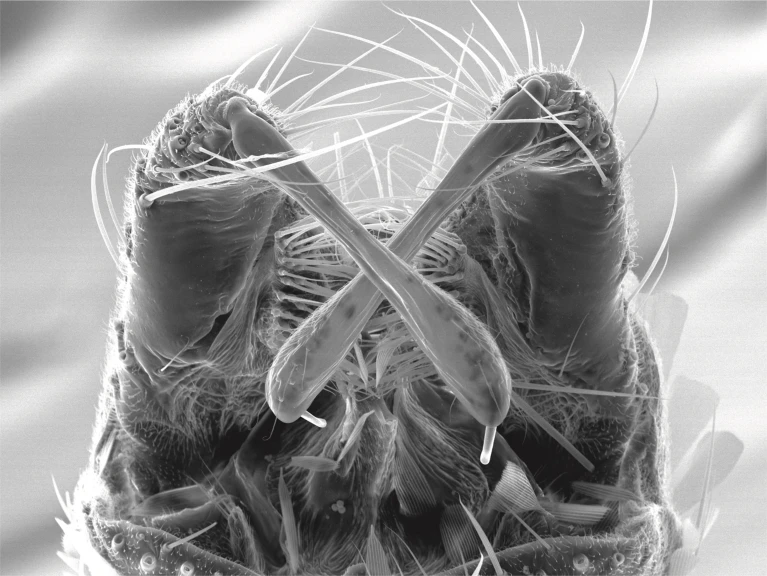
The videos revealed a fascinating dynamic. As Leah Houri-Zeevi, a postdoctoral researcher in Vosshall’s lab, noted, males do not simply extend their sex organs toward females. Instead, they use drumstick-like appendages called gonostyli to tap the female’s genitalia. Only when a virgin female responds by slightly extending the tip of her genitalia—by roughly the thickness of a human fingernail—does copulation occur. Females that have already mated generally keep their genitalia retracted, effectively preventing additional mating attempts.
“It’s really interesting, because there seems to be a code of receptivity,” says Nildimar Honório, an entomologist at the Oswaldo Cruz Institute in Brazil. This subtle interplay between male stimulation and female response demonstrates that female mosquitoes are active decision-makers in the mating process, rather than passive recipients.
The Lock-and-Key Mechanism
Vosshall’s team describes this as a lock-and-key system: the gonostyli act as the key, and female genitalia function as the lock. This mechanism was observed not only in Aedes aegypti but also in Aedes albopictus, a species that diverged from A. aegypti approximately 35 million years ago.
Interestingly, the researchers discovered that A. albopictus males can override this female-controlled mechanism when mating with A. aegypti females. “Aedes albopictus takes its enormous gonostyli and is basically able to open up the genital parts of Aedes aegypti females and copulate with them,” Vosshall explains. Although these interspecies matings produce no viable offspring, they effectively sterilize A. aegypti females by preventing them from mating with males of their own species. Vosshall warns that, if widespread, this phenomenon could contribute to local extinction of A. aegypti.
Implications for Disease Control
These findings may help explain why A. albopictus is increasingly outcompeting A. aegypti in areas where both species coexist. While A. aegypti, native to Africa, spread to parts of the Americas and Europe hundreds of years ago, A. albopictus arrived much more recently. Claudio Lazzari, an entomologist at the University of Tours in France, notes, “There are now areas where both species coexist, and what happens is that albopictus is outcompeting aegypti.” The sterilizing effect of interspecies mating appears to give A. albopictus a reproductive advantage, potentially reshaping mosquito populations in affected regions.
Understanding these interactions may also provide practical benefits for public health. A. aegypti is a major vector of dengue, Zika, and yellow fever, and controlling its population has been a persistent challenge. Targeting the mating process, particularly the female’s control mechanism, could present new avenues for reducing disease transmission. For example, releasing sterile or genetically modified males designed to interact with females in ways that prevent reproduction could suppress mosquito populations more effectively.
A Window into Mosquito Behavior
Beyond its practical applications, the study offers fresh insight into mosquito biology. The researchers emphasize that previous assumptions about male dominance in mating were largely due to the difficulty of observing these rapid, delicate interactions. “Scientists who previously studied mosquito breeding probably just shrugged and said, ‘Yeah, the male is in charge,’” Vosshall notes. High-resolution imaging and fluorescent markers now reveal a far more nuanced picture, highlighting the agency of female mosquitoes in determining reproductive outcomes.
Houri-Zeevi, who spent hundreds of hours analyzing the mating videos frame by frame, adds, “The details of these interactions are incredibly precise. The female’s slight extension of her genital tip is a critical signal, and without it, copulation simply doesn’t happen.” This degree of female control, while subtle, underscores the complexity of mosquito reproductive biology and challenges long-held assumptions about insect mating behavior.
Evolutionary Considerations
The findings also provide insight into evolutionary pressures shaping mosquito species. The ability of A. albopictus males to bypass female control in A. aegypti may explain part of their ecological success and expanding geographic range. Over millions of years, subtle variations in genital morphology and mating behavior have evolved, influencing reproductive success and species interactions.
The study demonstrates that even in small, seemingly simple organisms like mosquitoes, reproduction involves highly coordinated signaling between males and females. These discoveries not only enhance our understanding of mosquito behavior but also open potential pathways for interventions aimed at limiting the spread of vector-borne diseases.
Conclusion
Vosshall and her colleagues’ research overturns the traditional view of male-dominated mosquito mating and highlights the active role of females in reproductive decisions. By uncovering the lock-and-key mechanism controlling mating and revealing how interspecies interactions can sterilize females, the study offers both fundamental biological insights and potential strategies for disease control. As vector-borne diseases continue to pose significant global health challenges, understanding the subtleties of mosquito reproduction may prove critical in developing innovative solutions.
The research, published in Current Biology, underscores the value of meticulous observation and modern genetic tools in revealing hidden aspects of animal behavior. Female mosquitoes, it seems, are far from passive participants—they are the gatekeepers of reproduction, subtly determining which males succeed and shaping the evolutionary fate of their species.





Leave a Reply