
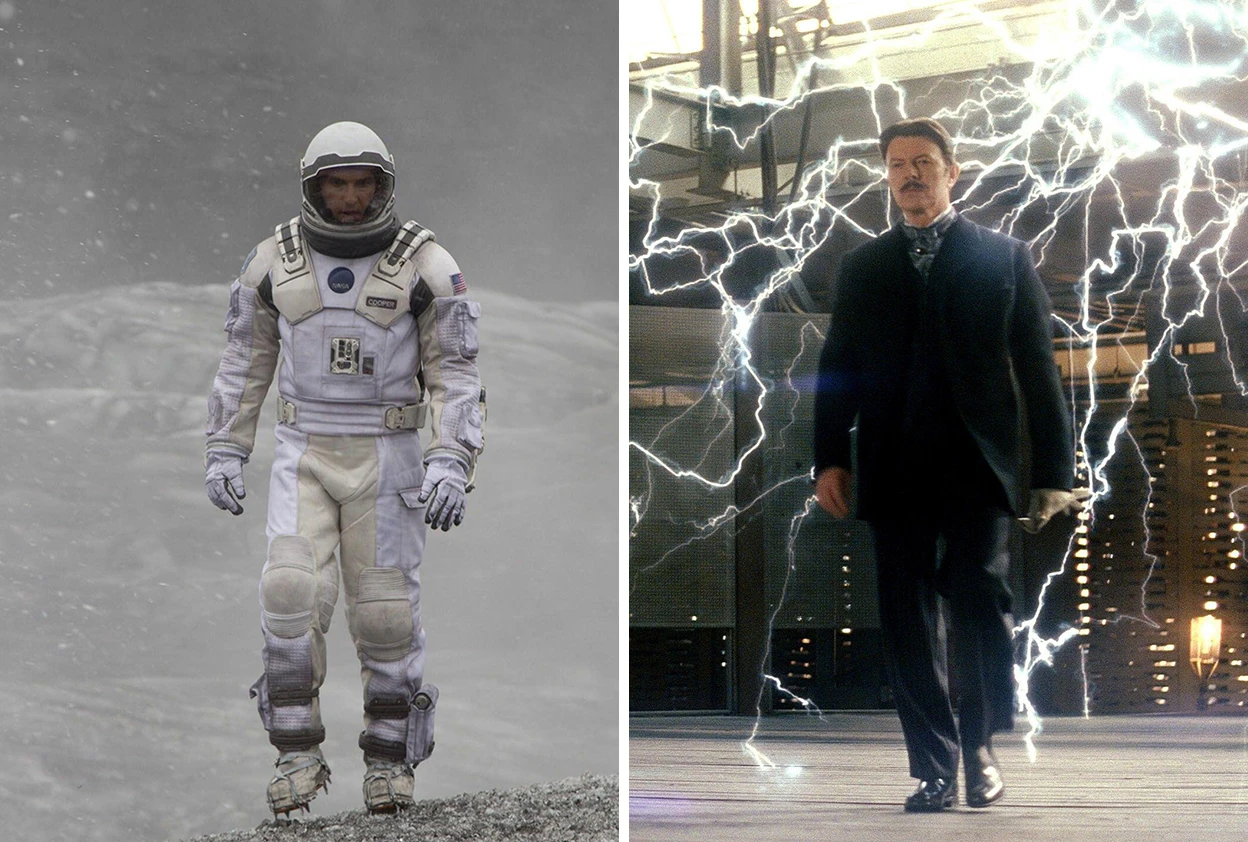
This year, in celebration of the 100th anniversary of quantum mechanics, Nature conducted interviews with numerous physicists. While opinions diverge sharply on how the century-old theory explains reality, one area of surprising consensus emerges: their favorite science-fiction films. Across multiple interviews, two films repeatedly surfaced for their scientific inspiration: Interstellar (2014) and The Prestige (2006), both directed and co-written by Christopher Nolan.
Nolan, who won an Academy Award for directing Oppenheimer (2023)—a film delving into the lives of the scientists behind the atomic bomb—traces his early interest in physics back to childhood exposure to science fiction. He cites the Star Wars films and Carl Sagan’s Cosmos: A Personal Voyage as formative influences. In a 2023 interview with The Talks, Nolan said, “It was something that stayed with me, and I applied it heavily in films like Interstellar. It demonstrated the dramatic potential of viewing the universe through a scientific lens, showing that science could be compelling and deeply engaging.”
Nolan did not participate in interviews for this article, likely due to his current focus on filming The Odyssey, a reimagining of the classic Greek epic scheduled for release on July 17, 2026. Nonetheless, physicists continue to praise his work for how it intertwines science with storytelling.
The Prestige (2006)
Set in London in the late 1890s, The Prestige follows rival magicians Robert Angier (Hugh Jackman) and Alfred Borden (Christian Bale), both famous for their ‘teleportation’ acts. Borden achieves his trick by concealing the existence of an identical twin, with whom he shares his identity. Angier, on the other hand, enlists the help of the renowned inventor Nikola Tesla (David Bowie) to construct a teleportation device, inadvertently creating a duplicate of himself with each performance.
“It’s a brilliant movie,” remarks Barry Luokkala, physicist and author of Exploring Science through Science Fiction (2013), who also teaches a course under the same name at Carnegie Mellon University in Pittsburgh, Pennsylvania.
Luokkala explains that he features clips of the film in his course for multiple reasons. First, it evokes the sense of wonder with illusions and magic that many experience as children. Second, it stretches the boundaries of known science by creatively imagining teleportation. Third, it presents a compelling character study, juxtaposing Jackman’s showman persona with Bale’s more subdued character, highlighting the extremes of rivalry and ambition.
For some, the film lingers in memory well beyond the credits. Rithya Kunnawalkam Elayavalli, a researcher of space-time evolution at Vanderbilt University, calls it “a steampunk representation of science we don’t yet understand. We can teleport information, but not matter—it remains a fascinating, fictional exploration of what science could be.”
Interstellar (2014)
Interstellar follows Joseph Cooper (Matthew McConaughey), a retired NASA engineer recruited for a mission to traverse a wormhole in search of a habitable planet near the black hole Gargantua. He later discovers that the mission’s designers, including his future self, intended the journey to be a one-way trip.
“This film is grounded in real science, stretching known phenomena to their extreme limits,” says Claudia de Rham, theoretical physicist at Imperial College London, who also hosts a podcast on the film.
Kai Liu, a materials physicist at Georgetown University, notes that the depiction of space, time, and parallel universes is particularly compelling. “The idea that you can revisit moments in time and perceive the universe in a new light is fascinating,” he says.
Interstellar also sparked group viewings among physicists. Kunnawalkam Elayavalli recalls attending a screening with fellow PhD students at Rutgers University, occupying an entire row in the theater. “We were probably the most distracting audience anyone had ever had,” she laughs. Similarly, Manuel Calderón de la Barca Sanchez, a researcher of heavy-ion collisions at Brookhaven National Laboratory, organized a special outing of colleagues to watch the movie.
The accuracy of the science is a major draw. Laura Green, chief scientist at the National High Magnetic Field Laboratory in Tallahassee, Florida, credits Nolan’s collaboration with Nobel laureate Kip Thorne of Caltech for this precision. “His work fundamentally changed how we think about phenomena like gravitational waves,” Green says. Thorne, like Nolan, declined an interview.

Other notable films
While Nolan’s works dominate physicists’ preferences, other films have also received recognition for scientific imagination:
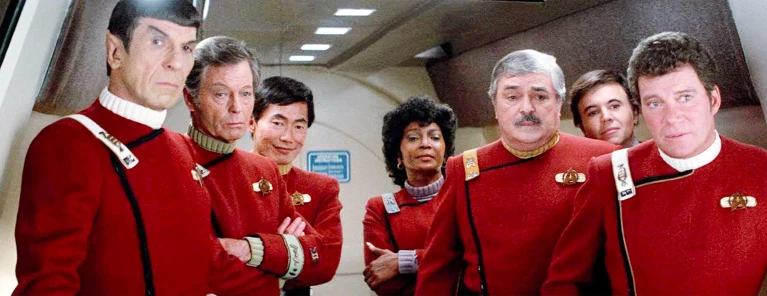
- Star Trek IV: The Voyage Home (1986) presents the USS Enterprise crew traveling back in time to save Earth by bringing extinct whales forward, thereby decoding a threatening alien signal. Luokkala highlights the portrayal of cutting-edge materials science, such as transparent aluminum, noting, “It’s remarkable how quickly recent technological innovations made it into the film.”
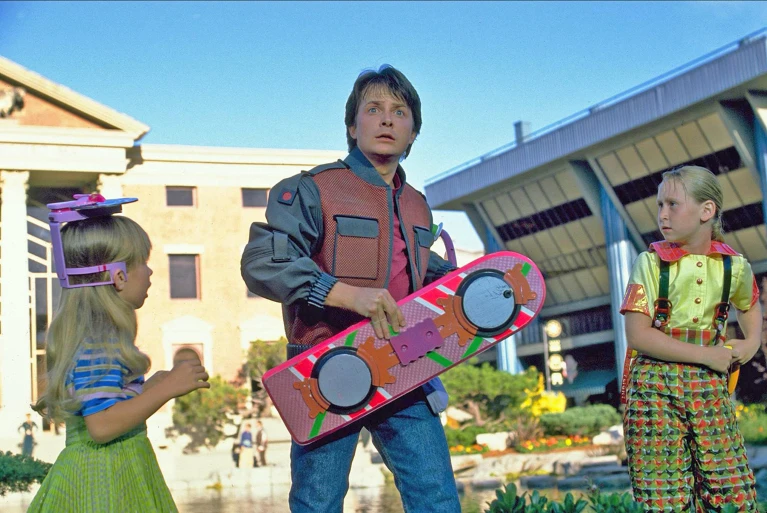
- Back to the Future Part II (1989) explores time travel in a futuristic context, with Marty McFly encountering inventions like the hoverboard. Liu uses this example in materials science classes to demonstrate how science fiction can inspire tangible technological progress, showing how an imaginative idea can eventually enter reality.
- Spider-Man: Into the Spider-Verse (2018) features villain Kingpin creating a particle collider to access parallel universes. Calderón de la Barca Sanchez remarks on the accuracy of the depiction: “The particle accelerator under Manhattan closely resembles the Compact Muon Solenoid at the Large Hadron Collider. It’s a meticulous recreation that scientists can appreciate.”
Across decades and genres, these films share a common thread: they ignite curiosity about the universe and encourage viewers to think critically about scientific possibilities. For physicists, the appeal is not only in accurate representation but also in the way these narratives provoke imagination, curiosity, and discussions about what might one day be achievable. Whether it is the mind-bending black holes in Interstellar or the intricate illusions in The Prestige, these stories offer both entertainment and intellectual stimulation.
As the field of physics continues to evolve, films like these serve as cultural touchstones that remind scientists of the creativity inherent in their discipline. Through the lens of science fiction, the mysteries of the cosmos become not just objects of study, but sources of inspiration, capable of transforming how we see the world and our place within it.





Leave a Reply