
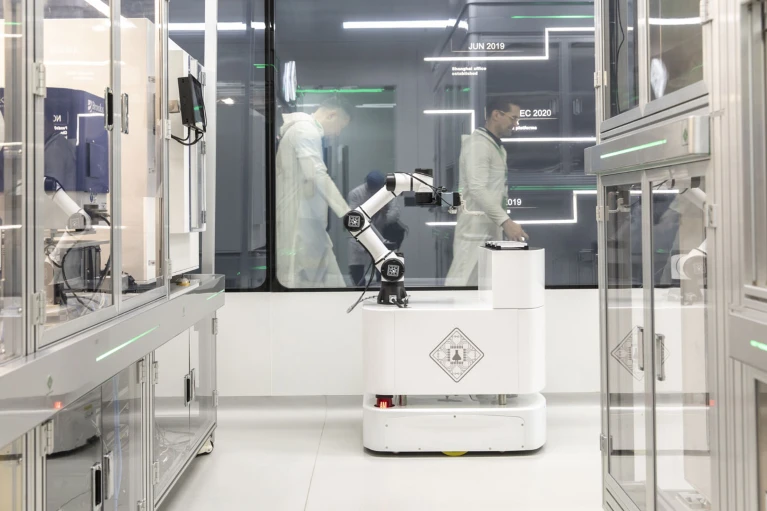
A new artificial intelligence (AI) model trained on intricate data from human cells could significantly accelerate the development of new drugs, offering a potential shortcut in a field that has long relied on labor-intensive methods.
Published on October 23 in Science, the study highlights a growing trend in drug discovery: the integration of AI to streamline the exhaustive task of sifting through massive libraries of chemical compounds in search of potential therapeutics.
“This represents a powerful blueprint for the future,” says Hongkui Deng, a cell biologist at Peking University in Beijing, who was not involved in the research. “It establishes a ‘smart’ screening system that can learn from its own experimental results.”
Traditional Drug Screening: A Time-Consuming Endeavor
For decades, drug discovery has largely depended on testing individual compounds on cells grown in the laboratory, one by one. While this approach has yielded successes—such as drugs capable of killing cancer cells—it is notoriously slow and resource-intensive.
In recent years, scientists have envisioned more sophisticated screening methods that leverage the explosion of genomic data collected from single cells. In principle, these approaches could assess how compounds influence entire networks of gene activity, potentially opening new avenues for drug development.
However, the challenge is substantial. Researchers often need to screen tens of thousands of compounds, or more, to identify a viable candidate, explains Alex Shalek, a biomedical engineer at the Massachusetts Institute of Technology (MIT) in Cambridge. Combining such extensive screening with complex genomic assays is usually too costly and laborious to be practical.
AI-Powered Drug Discovery: Enter DrugReflector
To overcome these limitations, Shalek collaborated with colleagues and the biotechnology company Cellarity, based in Somerville, Massachusetts. (Shalek also serves as a paid consultant for Cellarity.) Together, they developed a deep-learning model called DrugReflector, which was trained on publicly available data describing how nearly 9,600 chemical compounds influence gene activity across more than 50 different cell types.
The researchers then applied DrugReflector to identify compounds capable of modulating the production of platelets and red blood cells—an ability that could be valuable for treating certain blood disorders. From this AI-guided approach, they selected 107 compounds for laboratory testing to verify whether the predicted effects held true.
The results were striking. DrugReflector proved up to 17 times more effective at identifying relevant compounds compared to traditional, brute-force screening methods, which rely on randomly testing chemicals from large libraries. Moreover, when the researchers incorporated data from the first round of experimental testing back into the model, its predictive success rate doubled.
Reducing Labor and Costs in Drug Discovery
The AI-driven method could dramatically cut down the labor required for drug screening, says Bissan Al-Lazikani, a cancer data scientist at the University of Texas MD Anderson Cancer Center in Houston. “Instead of screening a million compounds, you could screen just a few hundred,” she notes, highlighting the potential for enormous savings in time and resources.
Deng adds that approaches like this could empower laboratories to explore compounds capable of reprogramming cells into new functional identities. His own lab has spent years attempting to coax stem cells into insulin-producing cells, a potential treatment for diabetes. AI-guided screening could help identify chemicals that accelerate or enhance this process.
However, current limitations remain. DrugReflector can only evaluate the 9,600 compounds included in its training dataset, meaning it cannot yet predict the effects of entirely new chemical molecules. This constraint restricts its ability to discover completely novel drug candidates, Deng cautions.
Toward Predicting Drug Effects from Chemical Structure
Looking ahead, the ultimate goal is to develop a system capable of predicting the biological effects of a molecule directly from its chemical structure, without relying solely on pre-existing experimental data. Such a capability could revolutionize drug discovery, enabling researchers to rapidly identify promising candidates and prioritize them for further testing.
“Current AI technologies are promising, but there is still a significant gap in accuracy and generalization,” Deng says. Enhancing these models’ ability to make reliable predictions across diverse chemical spaces remains a key challenge for the field.
Despite these hurdles, the integration of AI into drug discovery represents a major shift. Traditional methods, while effective, are slow and costly, limiting the speed at which new therapies can reach patients. AI models like DrugReflector offer a path toward faster, smarter, and more efficient screening processes, potentially transforming the way drugs are discovered and developed.
Broader Implications for Biomedicine
Beyond accelerating drug discovery, AI-driven approaches could have far-reaching impacts on personalized medicine and regenerative therapies. By mapping how chemicals affect gene activity at a granular level, researchers may be able to design treatments tailored to specific cell types or even individual patients. This precision could improve treatment outcomes while reducing side effects, representing a significant advance over conventional drug development strategies.
Moreover, the iterative learning approach used by DrugReflector—where the model improves as more experimental data is fed back into it—demonstrates the potential of AI systems that can refine themselves over time. This could lead to increasingly accurate predictions and more effective identification of compounds for complex diseases, from cancer to blood disorders to metabolic conditions.
While full realization of these ambitions may still be years away, the current work provides a clear demonstration of the potential for AI to revolutionize biomedicine. Researchers are now tasked with expanding the chemical libraries that AI models can evaluate, improving prediction accuracy, and ultimately bridging the gap between computational predictions and laboratory validation.
In conclusion, DrugReflector represents a significant step forward in the use of AI for drug discovery. By leveraging genomic data and deep learning, the model can efficiently identify promising compounds, drastically reducing the workload and accelerating the pace of research. As AI models continue to evolve, the hope is that they will not only streamline the discovery process but also enable the development of entirely new therapies, bringing faster relief to patients worldwide.



Leave a Reply