
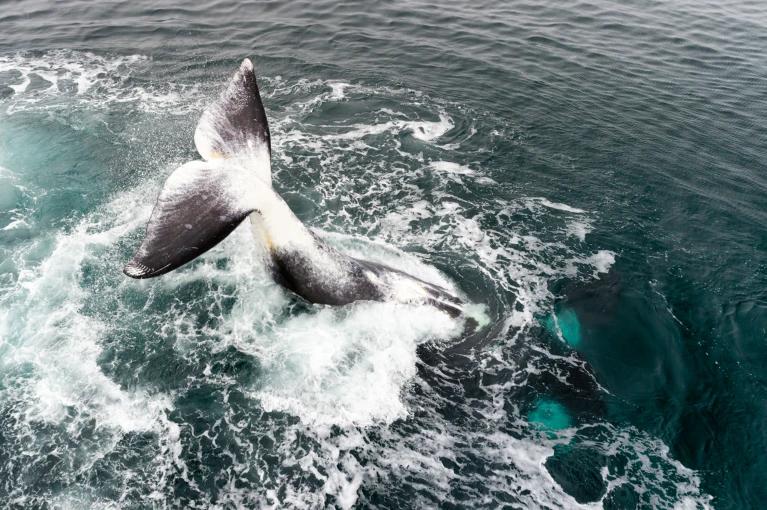
Encased in a thick, half-meter layer of insulating blubber and powerful enough to break through Arctic ice with its massive head, the bowhead whale hardly looks like a symbol of health and vitality. Yet this 80,000-kilogram giant of the sea hides one of nature’s most remarkable secrets — a lifespan that can stretch beyond two centuries. Living over 200 years, the bowhead whale (Balaena mysticetus) stands as one of the longest-lived mammals on Earth, outlasting even the oldest humans by more than a lifetime.
Recent research published in Nature has revealed a fascinating reason behind this exceptional longevity. Scientists discovered that the bowhead whale possesses a unique cold-activated protein that helps repair broken DNA, offering the species an extraordinary resistance to cancer and other age-related diseases. This mechanism may one day help researchers uncover new ways to slow down human aging and prevent degenerative illnesses.
Zhiyong Mao, a molecular biologist at Tongji University in Shanghai who was not involved in the study, commented that “everybody knows the bowhead whale is extremely long-lived, but nobody knew why.” He noted that this discovery highlights the critical role of DNA repair in maintaining genome stability — a key factor in the whale’s remarkable lifespan. When the bowhead’s special protein was introduced into human cells, those cells showed a significantly enhanced ability to repair damaged DNA.
Studying a Giant
Scientists have long been intrigued by animals that defy typical lifespan expectations. From bats to elephants and even the naked mole rat — which can live for over three decades despite its small size — researchers have sought biological clues that could explain such durability. Just earlier this month, Mao and his team identified a DNA-repair protein in naked mole rats that contributes to their longevity.
However, the bowhead whale presents unique challenges as a research subject. It is one of the largest animals on Earth and lives in some of the most remote and inhospitable environments imaginable. Capturing and studying these whales in controlled conditions is impossible, and their endangered status makes field research equally difficult.
Fortunately, scientists have found an unconventional way to obtain samples. Each autumn, Indigenous Iñupiaq communities in northern Alaska conduct a limited and carefully regulated bowhead whale hunt — a practice that has deep cultural and subsistence importance. After each hunt, small tissue samples are preserved and later collected by research teams.
Vera Gorbunova, a biologist at the University of Rochester and co-author of the study, leads a team that travels to these remote villages to retrieve the samples. “Courier service doesn’t go there,” Gorbunova explained. “There are no roads.” Her team then transports the tissue back to the lab, where they grow and study the whale cells to understand the biology behind their longevity.
The DNA-Repair Advantage
When researchers first cultured bowhead whale cells, they assumed these cells would be highly resistant to becoming cancerous — a logical assumption given the animal’s long life and massive size. Surprisingly, the opposite appeared true. Whale cells required fewer cancer-causing mutations to turn malignant compared to human cells.
However, the crucial difference lay not in how the cells responded to mutations, but in how effectively they prevented them from occurring in the first place. The whale cells demonstrated exceptional efficiency at repairing damaged DNA and had a lower overall mutation rate than human cells.
The team traced this resilience to a protein called CIRPB, which becomes active in cold environments. This protein appears to play a key role in repairing broken DNA strands, maintaining genomic stability even under harsh Arctic conditions. When CIRPB was introduced into human cells in laboratory experiments, DNA repair improved significantly. Furthermore, when the protein was expressed in fruit flies, the flies not only lived longer but also exhibited greater resistance to radiation — a major cause of DNA damage.
This discovery offers compelling evidence that enhancing DNA repair mechanisms could be a cornerstone of longevity. While the findings are still at an early stage, they suggest that similar strategies could one day help slow aging or improve human resistance to diseases linked to genetic damage.
What It Means for Humans
Understanding CIRPB’s exact mechanism will require more research, but its potential implications are profound. The study adds to a growing body of evidence that DNA repair is central to lifespan and disease prevention. As species like the bowhead whale and naked mole rat demonstrate, evolution has already discovered multiple ways to protect DNA and delay the onset of age-related decline.
For humans, these discoveries may hold the key to healthier, longer lives. Instead of focusing solely on combating individual diseases, scientists could aim to strengthen the body’s natural repair systems — the same approach that helps Arctic whales thrive for centuries.
“The most exciting take-home message here is that there is room for improvement,” says Gorbunova. “We can make our DNA repair better.”
Her words capture the essence of what the bowhead whale represents — a living example of how life can persist and adapt against extraordinary odds. By studying this Arctic giant, scientists are not merely uncovering the secrets of a single species but are gaining insights that could redefine our understanding of aging itself.
In the icy waters of the North, where temperatures plunge far below freezing and survival demands constant adaptation, the bowhead whale has mastered the art of resilience. Its biology tells a story of endurance, repair, and renewal — one that could ultimately help humankind unlock the secrets to longevity written deep within our own DNA.




Leave a Reply