
Under the administration of President Donald Trump, the U.S. government has embarked on a sweeping rollback of scientific research funding, signaling what many experts describe as one of the most aggressive assaults on science in modern history. The National Institutes of Health (NIH) has already retracted nearly $2 billion in previously approved grants, while the National Science Foundation (NSF) has terminated more than 1,400 research projects. Trump’s proposed 2026 fiscal budget goes even further, suggesting a 36% reduction in non-defense-related research and development spending — a move that could reshape the nation’s scientific landscape for decades.
John Holdren, a Harvard University professor and former science adviser to President Barack Obama, warns that this marks a coordinated effort to dismantle long-term scientific progress. “They have cancelled a wide variety of research efforts midstream,” Holdren explains. “And now they intend to solidify it with massive budget cuts.”
The halted and endangered research spans both applied projects — with clear commercial or practical objectives — and fundamental “blue-sky” investigations that aim to expand human understanding. Basic research, though often viewed as abstract or impractical, has historically served as the bedrock of innovation. “The societal return on investment in basic research is immense,” says Holdren. “It’s typically multiple dollars back for every dollar invested.”
Private industries rarely fund such research because the rewards may not materialize for decades, and ownership of discoveries often remains uncertain. As Holdren notes, “The responsibility for supporting fundamental research ultimately rests with government.” Without this commitment, the flow of groundbreaking discoveries that drive economic growth, technological advancement, and medical breakthroughs could be drastically reduced.
To understand what’s at stake, one only needs to look at the transformative discoveries that arose from government-funded basic research.

From Yellowstone’s Hot Springs to DNA Testing
In 1966, undergraduate researcher Hudson Freeze worked under microbiologist Thomas Brock at Yellowstone National Park, studying microorganisms that could survive extreme heat. Freeze’s discovery of Thermus aquaticus — a bacterium thriving at 70°C — later led scientists to isolate an enzyme known as Taq polymerase. This heat-tolerant enzyme became the foundation for polymerase chain reaction (PCR), a revolutionary method that allows scientists to replicate DNA millions of times.
Decades later, PCR became indispensable in genetics, forensics, and medicine — from diagnosing diseases to identifying crime suspects through DNA fingerprinting. What began as curiosity-driven exploration in the wilderness became one of the defining technologies of modern biology.
How Atomic Physics Led to MRI
The medical imaging technology known as MRI — magnetic resonance imaging — owes its origins to research from the 1930s that had no medical goals at all. Scientists studying the spin of protons and neutrons, led by physicist Isidor Rabi, developed a method to detect how atomic nuclei respond to magnetic fields. Rabi’s findings earned him the 1944 Nobel Prize in Physics.
Decades later, researchers transformed these principles into tools for visualizing internal organs and tissues. By the 1970s, nuclear magnetic resonance was adapted to generate three-dimensional images of the human body, evolving into MRI. Paul Lauterbur and Peter Mansfield’s pioneering work in this field earned them the Nobel Prize in Medicine in 2003. Today, MRI scans are essential in diagnosing cancer, brain disorders, and countless other conditions — all rooted in once “esoteric” nuclear physics.

Liquid Crystals: From Carrots to Flat Screens
In 1888, botanist Friedrich Reinitzer in Prague observed strange behavior in compounds extracted from carrots: they became liquid while still retaining crystalline properties. Collaborating with physicist Otto Lehmann, Reinitzer identified a new state of matter — the “liquid crystal.”
For decades, scientists dismissed this idea because it defied the conventional categories of solid, liquid, and gas. Only in the 20th century did researchers realize its potential. In the late 1950s, U.S. chemists revived the field, and by 1968, engineers had developed the first liquid crystal displays (LCDs). Today, LCDs power televisions, smartphones, and laptops worldwide — a direct outcome of a botanical curiosity from over a century ago.
CRISPR: The Revolution in Gene Editing
The CRISPR gene-editing technology that earned Jennifer Doudna and Emmanuelle Charpentier the 2020 Nobel Prize in Chemistry has its roots in basic microbiology. In 1989, Spanish scientist Francisco Mojica studied salt-loving microorganisms near Alicante and discovered repeating DNA sequences, later named CRISPR. At the time, their function was unknown.
Mojica later found that these DNA segments were actually part of a bacterial immune system that could recognize and destroy invading viruses. Building on this insight, Doudna and Charpentier transformed CRISPR into a programmable tool to cut and edit genes with unprecedented precision. The result has revolutionized medicine — enabling potential cures for genetic diseases such as sickle-cell anemia and paving the way for therapies once thought impossible.
From Lizard Venom to Weight-Loss Drugs
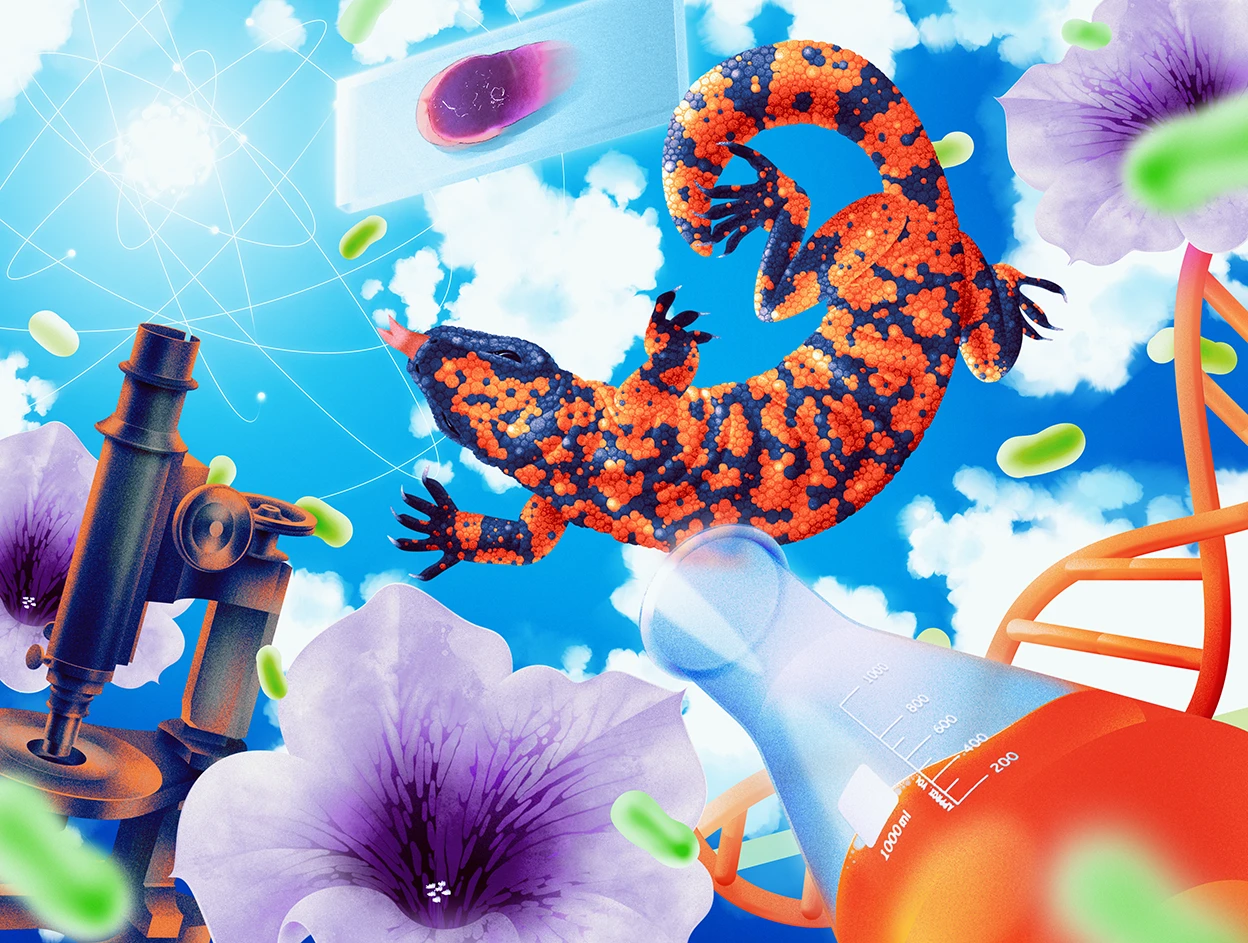
The now-famous diabetes and weight-loss medications like Ozempic can trace part of their development to venomous lizards in the American Southwest. In the early 1990s, researchers identified a peptide called exendin-4 in the venom of Gila monsters. This peptide mimicked a human hormone known as GLP-1, which regulates insulin and appetite.
Scientists including Daniel Drucker realized that exendin-4 could activate the same receptors as GLP-1 but lasted longer in the body. This led to the development of exenatide, approved in 2008, which lowered blood sugar and induced weight loss. The discovery marked the beginning of a new generation of metabolic therapies that now generate billions in global sales — and it all began with basic zoological research.
RNA Interference: Petunias and Precision Medicine
In 1990, a genetic engineering experiment on purple petunias unexpectedly produced white flowers. Researchers were puzzled: instead of enhancing pigment production, the added gene silenced it. Years of investigation revealed that small RNA molecules could suppress gene expression — a mechanism known as RNA interference (RNAi).
In 1998, scientists Andrew Fire and Craig Mello uncovered how double-stranded RNA triggers the destruction of messenger RNA, halting protein production. Their work won the 2006 Nobel Prize in Medicine. Today, RNAi technology has led to new classes of gene-silencing drugs, such as fitusiran for treating hemophilia, transforming rare genetic research into life-saving therapies.
Measuring the Age of Earth and Cleaning the Air
In the 1950s, geochemist Clair Patterson used uranium decay to date meteorites, ultimately determining Earth’s age at 4.55 billion years. Yet while conducting this research, he discovered widespread lead contamination that interfered with his measurements. Investigating further, Patterson found that leaded gasoline was the main source of pollution. His work, initially met with fierce opposition from industry, ultimately led to global bans on leaded fuel — saving millions of lives and improving air quality worldwide.
The Fragile Future of Discovery
Each of these breakthroughs — from PCR to MRI, CRISPR, and RNAi — originated from research once dismissed as impractical or obscure. They underscore a profound truth: fundamental science, supported by steady government funding, is the foundation of progress.
If the Trump administration’s proposed cuts take effect, the ripple effects could stifle innovation for generations. The discoveries of tomorrow — those that might cure diseases, clean the environment, or transform technology — depend on the experiments of today that have no immediate payoff. As Holdren and other scientists warn, “When a nation stops investing in its curiosity, it stops investing in its future.”





Leave a Reply