
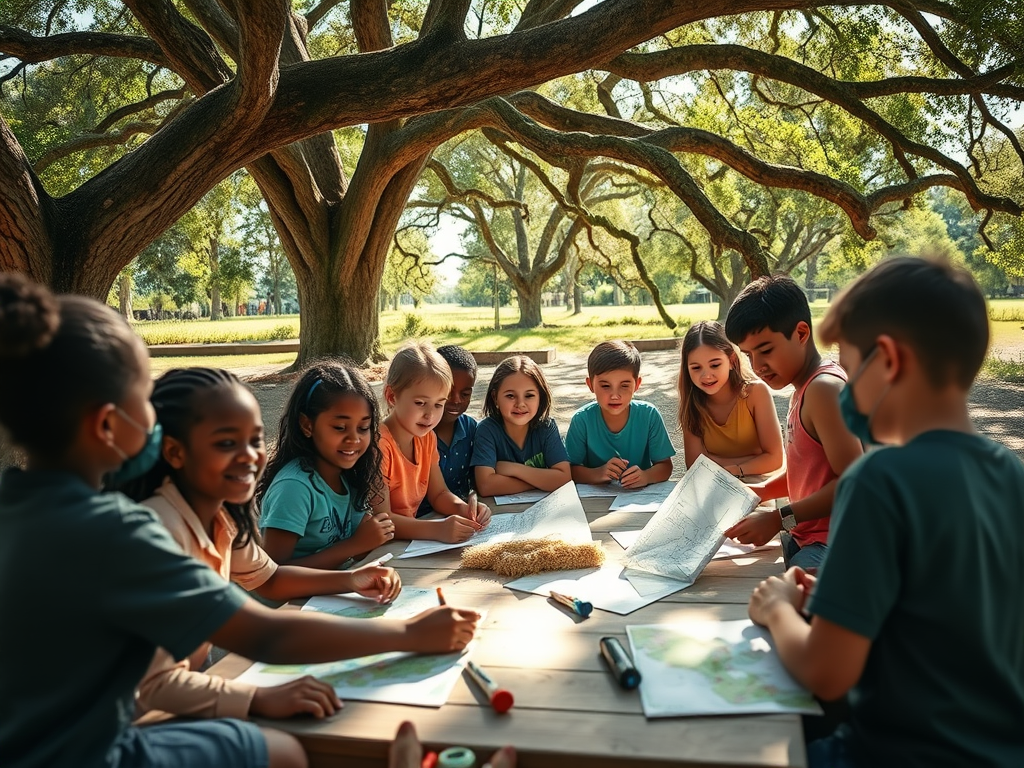
WASHINGTON — The National Academies of Sciences, Engineering, and Medicine’s Gulf Research Program (GRP) has joined forces with the National Oceanic and Atmospheric Administration’s Environmental Literacy Program in a significant new initiative aimed at strengthening environmental understanding and resilience across the Gulf Coast. Through a combined investment of four million dollars, the two organizations are supporting six innovative educational projects across Texas, Louisiana, Mississippi, Alabama, and Florida. Each project is designed to deepen residents’ understanding of how science, local ecosystems, and community well-being are interconnected, while also preparing people to respond more effectively to climate-driven environmental challenges.
Karena Mothershed, director of GRP’s Board on Gulf Education and Engagement, emphasized the importance of placing communities at the center of this work. She noted that the partnership with NOAA expands the reach of resilience education by engaging people of all ages beyond traditional classrooms, fostering civic participation, and strengthening long-term capacity within Gulf communities to adapt to environmental risks.
At the core of these efforts is a commitment to empower residents—particularly youth, underserved populations, and local leaders—to take meaningful action in their communities. The selected projects encourage hands-on learning, promote environmental literacy, and create opportunities for individuals to contribute directly to resilience-building efforts.
Below are the six awarded projects and the objectives they aim to achieve.
Resilient Construction and Verified Community Training — Credentialing for Recovery, Empowerment, Advancement, Training, and Education
Project Director: Jason von Meding, University of Florida
Project Locations: Jacksonville, Gainesville, and Cedar Key, Florida
Award Amount: $577,320
This Florida-based initiative is developing an accessible training and credentialing system to prepare adults for disaster recovery work and resilient construction, regardless of their previous experience. As severe weather events become more frequent due to climate change, communities often depend on local residents to assist with rebuilding. However, many adults lack the essential knowledge needed to work safely and effectively in post-disaster environments. This program uses scenario-based learning and interactive simulations to teach recovery coordination, safety protocols, and climate-resilient construction practices. A digital platform will allow participants to share practical solutions and lessons learned, strengthening a community resilience network. By blending education, workforce readiness, and civic engagement, the project offers a scalable model for adult learning in climate adaptation and disaster response.
After the Rain: Envisioning New Orleans’ Water Future Through Science and Music
Project Director: Claire Anderson, Ripple Effect Water Literacy Project
Project Location: New Orleans, Louisiana
Award Amount: $715,937
This project expands the city’s long-running efforts to educate young students about water management and stormwater flooding. Rising fifth graders will participate in hands-on science activities focused on the unique environmental challenges New Orleans faces. A new component called the After the Rain music lab integrates songwriting and performance, giving students an opportunity to express their experiences with flooding and deepen their connection to environmental issues through artistic creativity. A community steering committee will ensure the curriculum reflects the realities of life in New Orleans, while family-oriented water literacy events will highlight student work and broaden public awareness of citywide resilience strategies. By merging science education with the arts and community participation, the project strengthens families’ understanding of local challenges and builds long-term investment in youth water literacy.
Youth Climate Leadership and Workforce Development Initiative for Community Resilience in Osceola County
Project Director: Frank Weaver, Alianza Center
Project Location: Osceola County, Florida
Award Amount: $691,702
In Kissimmee, where limited tree coverage contributes to higher temperatures, elevated air pollution, and increased health vulnerabilities, the Alianza Center is launching a youth-centered environmental and workforce development program. Participants will engage in urban forestry activities, including tree planting and environmental restoration, as part of a broader effort to reduce heat, improve air quality, and strengthen community health. At the same time, the initiative introduces young people to career opportunities in the expanding green jobs sector. By pairing environmental action with pathways to economic advancement, the program aims to build community resilience while training future leaders who are equipped to drive sustainable development.
Empowering Youth for Urban Resilience: Hurricane and Stormwater Solutions in Baytown, Texas
Project Director: Virginia “Ginger” McKay, Goose Creek Consolidated Independent School District
Project Location: Baytown, Texas
Award Amount: $690,000
This three-year effort focuses on equipping middle and high school students with the tools to study and address local flooding and stormwater issues. Students will work with NOAA storm datasets, participate in field research, and utilize GIS technology to map risks and propose solutions. Partnerships with institutions such as Texas A&M Galveston, the Baytown Wetlands Center, ExxonMobil, and Lee College will expand learning opportunities and create real-world applications. The project includes several public-facing components, including student-produced public service announcements, an interactive resilience dashboard, and a youth-led Urban Resilience Summit. Additionally, 25 student scholarships will recognize participants who demonstrate exceptional leadership and civic engagement. Overall, the project strengthens scientific literacy, enhances career readiness, and supports community resilience planning in a region vulnerable to flooding.
FLOWS: FloodSmart Southeast Texas Youth Initiative for Environmental Literacy and Community Resilience
Project Director: Thinesh Selvaratnam, Lamar University
Project Location: Port Arthur, Beaumont, and Orange Metropolitan Area, Texas
Award Amount: $678,003
Led by Lamar University in partnership with local organizations, the FLOWS program engages students in grades eight through ten in designing and constructing rain gardens that reduce flood risk and serve as living laboratories. Students will learn core environmental science concepts, including plant ecology, hydrology, and runoff dynamics, through lessons aligned with the Texas Essential Knowledge and Skills standards. They will then apply this knowledge by conducting site assessments and building rain gardens on campus. Teachers will receive annual summer training to strengthen environmental science instruction, and a modular teaching kit will help schools with limited outdoor space adopt the curriculum. Over its duration, the program will reach more than 300 students and 20 teachers, create multiple rain gardens, and produce resources that can be used by communities across the state.
Co-Designing Resiliency: From Monitoring to Making Change with Citizen Science Water Data
Project Director: Mona Dominguez, Auburn University
Project Location: Auburn, Alabama
Award Amount: $739,982
This Alabama-based project uses decades of citizen-generated water quality data to help communities diagnose and address local watershed challenges. Participants will learn how to interpret and apply data collected through Alabama Water Watch, empowering them to take an active role in safeguarding local water resources. With guidance from Auburn University researchers, watershed groups will co-design strategies to address pollution, ecological degradation, and other water quality concerns. Planned activities include a statewide needs assessment, creation of new digital tools for data analysis, and a collaborative hackathon where community members and researchers develop actionable solutions. The project showcases the strength of community knowledge and participation while offering a replicable model for turning long-term datasets into meaningful environmental action.
Founded in 2013 as part of the legal settlements related to the Deepwater Horizon disaster, the National Academies’ Gulf Research Program focuses on advancing scientific knowledge to enhance offshore energy safety, environmental protection, and community well-being across the Gulf region. The National Academies of Sciences, Engineering, and Medicine operate as private nonprofit institutions dedicated to providing independent, evidence-based guidance on issues critical to the nation’s scientific and technological progress. Established under an 1863 congressional charter signed by President Abraham Lincoln, the National Academies continue to contribute objective expertise to inform public policy and address complex national challenges.




Leave a Reply