
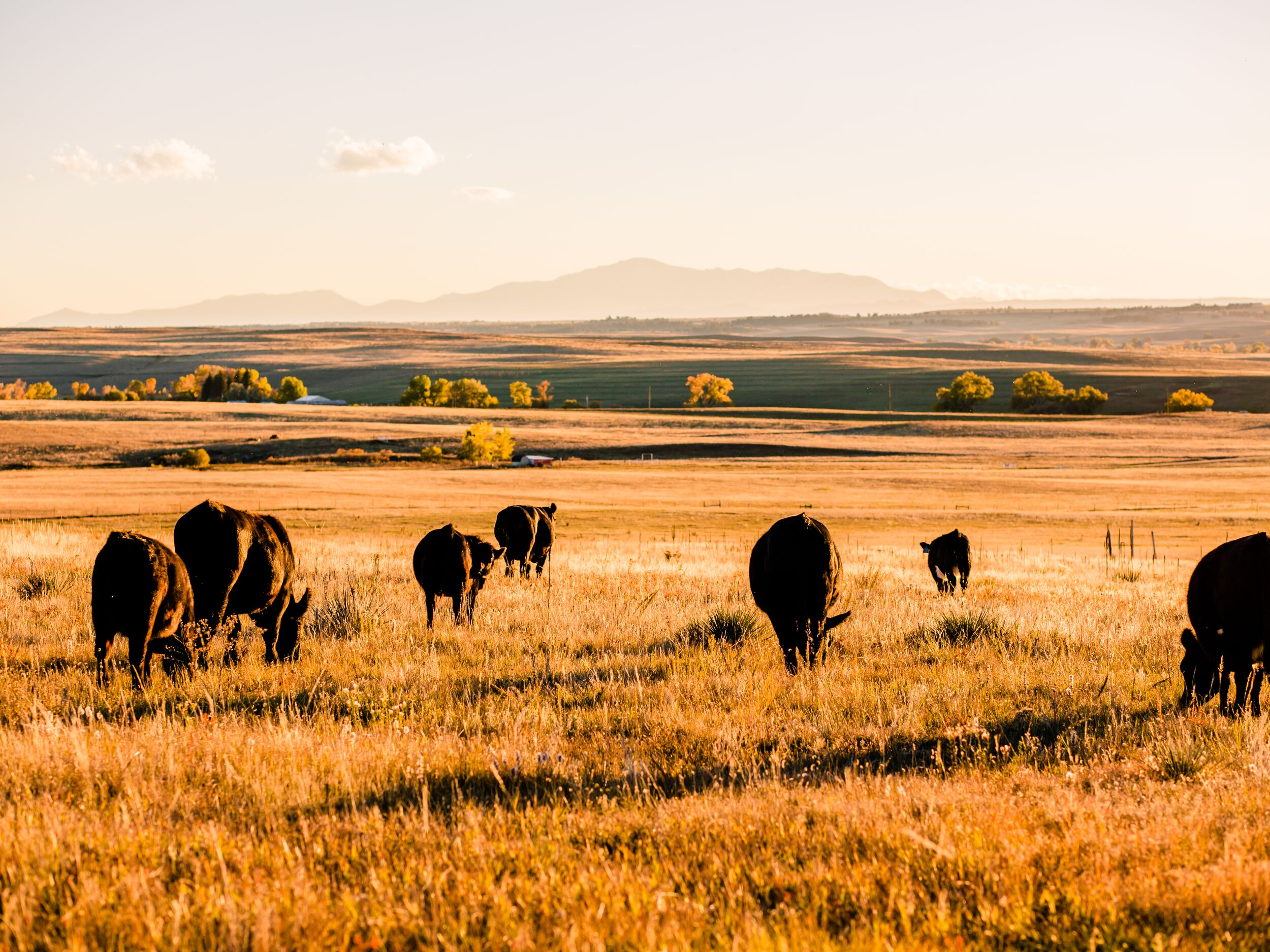
Staff members working with Colorado lawmakers and research institutions recently took part in an in-depth discussion on how scientific knowledge can reinforce resilience across the state’s diverse agricultural systems amid an increasingly unpredictable climate.
Stretching from snow-fed mountain headwaters to the dry, wind-swept plains in the southeast, Colorado is defined by dramatic environmental contrasts. These variations have shaped the state’s farming traditions for generations, but today they also sit at the center of growing climate-related pressures.
These challenges were the focus of Colorado Crossroads: Resilient Agriculture in a Changing Climate, a day-long forum held on October 15, 2025, at Colorado State University’s Spur Campus in Denver. The gathering brought together scientists, agricultural producers, and staff from state agencies and the legislature to examine how science can support agriculture as conditions shift rapidly.
The event was convened under the National Academies’ Climate Crossroads initiative, in collaboration with CSU’s Climate Hub at Spur and the Institute for Science and Policy at the Denver Museum of Nature and Science. It was part of a broader effort to strengthen connections between scientific research and public decision-making through regional engagement and training.
Through keynote presentations, interactive discussions, and firsthand accounts from producers, participants explored the most reliable climate tools available in Colorado and beyond. The sessions emphasized how evidence-based research can inform policies that support agricultural resilience while remaining practical for those working the land.
Veera Mitzner, Director of the CSU Spur Climate Hub, described the forum as a clear example of the hub’s mission. She explained that the goal is to make scientific knowledge more accessible to those who need it most, using partnerships and open dialogue to connect academic research with real-world challenges faced by communities across the state.
Understanding a Climate of Extremes
Colorado experiences some of the most pronounced climate contrasts in the country. Temperature differences between its warmest lowlands and coldest mountain peaks exceed those seen between cities as far apart as Miami and Reykjavík. This diversity produces a wide range of localized climate conditions, each vulnerable to different combinations of heat, drought, wildfire, and flooding.
Researchers from the Colorado Climate Center and the Office of the State Climatologist presented long-term observational data showing that warming trends are evident across all seasons. Snowpack is declining, extreme heat events are becoming more intense, and precipitation patterns are increasingly difficult to predict. As Assistant State Climatologist Peter Goble observed, what once counted as a “normal” year may now be the exception rather than the rule.
Despite these challenges, participants noted that Colorado is well positioned to respond. The state has a long history of climate monitoring and collaboration, paired with emerging partnerships that link communities, scientists, and policymakers in new ways.
Russ Schumacher, State Climatologist and Director of the Colorado Climate Center, emphasized that supporting agriculture has been central to the center’s mission since its founding. Today, it provides freely available tools, monthly climate summaries, and historical context to help users better understand current conditions and emerging risks.
Water at the Center of Resilience
Nearly every conversation during the forum returned to one essential issue: water. As climate change, population growth, and extreme weather alter both the timing and availability of water, competition among agricultural, municipal, and residential users is intensifying.
Speakers stressed that collaboration grounded in scientific analysis is vital for managing this shared resource. From basin-scale modeling to local efficiency strategies, science can help guide decisions that balance competing demands. Yet water scarcity is only part of the challenge. Complex policies, historical water rights, and expanding urban development have left many western river systems fully allocated or overextended.
Brad Udall, Senior Scientist at the Colorado Water Center, described the situation as a convergence of outdated legal frameworks, aging infrastructure, and modern population pressures. He noted that building resilience will require creative solutions, such as flexible water-sharing arrangements, crop transitions, and greater inclusion of Tribal nations in water governance discussions.
Building Resilience from the Ground Up
Sessions focused on soil health and rangeland management highlighted a common theme: much of Colorado’s resilience already resides with its farmers and ranchers.
Producers shared how they are adjusting planting schedules, experimenting with cover crops, adopting regenerative practices, and testing new technologies such as precision conservation tools and virtual fencing. These efforts represent significant investments of time and resources, often undertaken in the face of growing uncertainty.
Norm Dinis of Empire Dairy described the increasing risks faced by farmers, noting that while agriculture has always involved uncertainty, climate volatility has raised the stakes to unprecedented levels.
Soil scientists underscored that healthy soils play a critical role in both adapting to and mitigating climate change. Improved soil structure can enhance water retention, store carbon, and stabilize yields. However, fragmented incentive systems and insurance policies often discourage long-term investments in soil health.
Participants pointed to a disconnect between the wide range of technical tools available and what producers can realistically adopt. They called for better alignment among financial programs, technical assistance, and policy frameworks.
Lauren Gifford, Director of the Soil Carbon Solutions Center, observed that markets often reward the rehabilitation of degraded land rather than supporting those who have consistently practiced regenerative management. Insurance structures and other economic factors strongly influence on-the-ground decisions. Still, she and others noted strong enthusiasm among producers to adopt sustainable approaches. Meagan Schipanski, a professor in CSU’s Department of Soil and Crop Sciences, described farmers and ranchers as natural innovators whose experience offers invaluable insights for researchers.
Connecting Research, Experience, and Policy
One of the clearest messages from the workshop was that Colorado already possesses many of the necessary ingredients for climate resilience. What remains is the challenge of better connecting research institutions, producers, and policymakers.
Scientists discussed advanced measurement efforts, including airborne monitoring of greenhouse gases and air quality, which can generate highly detailed data. However, these insights are most effective when combined with observations from the field. Producers’ day-to-day experiences provide essential context that can refine scientific models and improve their relevance.
At the same time, policymakers play a key role in aligning regulations and incentives so that climate-smart practices are not only environmentally sound but also economically feasible. Participants emphasized that effective climate policy should focus on strengthening adaptive capacity rather than prescribing a single set of solutions.
Reflections and Next Steps
As the event concluded, attendees shared how the discussions would influence their future work. Some noted that the knowledge gained would help them better explain the financial implications of climate and water challenges, while others said they felt more prepared to evaluate upcoming legislation related to agriculture and climate resilience.
The conversations in Colorado highlighted a central lesson: resilience grows through connection. By fostering collaboration among scientists, producers, and decision-makers, initiatives like Climate Crossroads aim to turn scientific understanding into coordinated action tailored to local needs.
The Climate Crossroads program will continue to support similar dialogues in other regions, helping communities navigate climate challenges through shared knowledge and collective problem-solving.
Acknowledgments
The event was supported by the Waverley Street Foundation and the Platform for Agriculture and Climate Transformation. Appreciation is extended to the Colorado Crossroads Working Group and National Academies staff whose guidance and coordination made the forum possible.





Leave a Reply