
Washington, DC, January 08, 2026 —
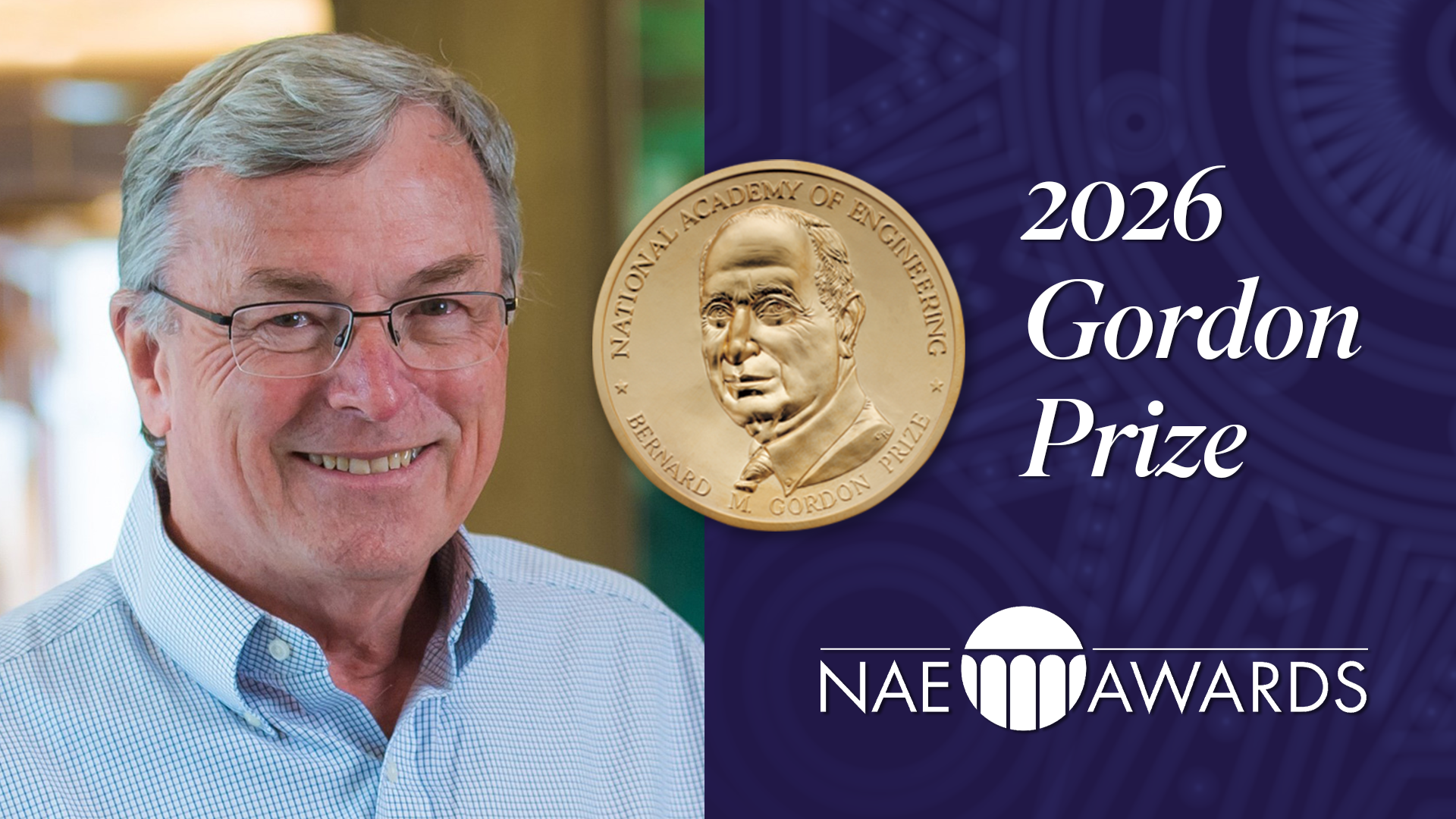
The National Academy of Engineering (NAE) has announced that T. Alan Hatton will receive the 2026 Bernard M. Gordon Prize for Innovation in Engineering and Technology Education. He is being honored for his role in advancing an immersive, industry-connected approach to engineering education that has cultivated thousands of engineering leaders and significantly enhanced workforce preparedness and U.S. technological competitiveness.
The Bernard M. Gordon Prize for Innovation in Engineering and Technology Education is one of the most prestigious awards in the field of engineering education. It recognizes groundbreaking educational models and experimental approaches that effectively prepare engineers to lead in complex, real-world environments. Awarded each year, the prize includes a total monetary award of $500,000. Half of the award is presented directly to the recipient, while the remaining portion is allocated to the recipient’s institution to support the ongoing development, improvement, and broader adoption of the recognized educational innovation.
Hatton’s impact on engineering education is most closely associated with his long-standing leadership of the David H. Koch School of Chemical Engineering Practice at the Massachusetts Institute of Technology. Often referred to as the Practice School, this distinctive program immerses students in real industrial environments, where they work in teams to solve authentic engineering problems faced by partner companies. Rather than limiting learning to classrooms or simulated exercises, the program integrates advanced academic training with hands-on, project-based experience in industry settings.
Through this model, students develop not only deep technical expertise but also critical professional skills, including leadership, communication, teamwork, and problem-solving under real constraints. Graduates of the Practice School are known for their ability to transition smoothly into industry roles, contribute quickly to complex projects, and take on leadership responsibilities early in their careers. Over the decades, thousands of engineers trained through the program have gone on to lead research and development teams, improve industrial processes, and drive innovation across sectors such as chemical engineering, biotechnology, semiconductors, energy, and advanced manufacturing.
Hatton’s educational vision has helped narrow the gap between academia and industry, ensuring that engineering education remains closely aligned with evolving technological and workforce needs. By embedding students directly into industrial contexts, his approach prepares future engineers to manage uncertainty, collaborate across disciplines, and deliver tangible impact, all of which are essential for maintaining national competitiveness in science and technology.
Currently, Hatton holds the position of Ralph Landau Professor of Chemical Engineering Practice, Post Tenure, at MIT. His academic journey began in South Africa, where he earned both his Bachelor of Science in Engineering with honors and his Master of Science in Engineering in chemical engineering from the University of Natal in Durban. After completing his early studies, he worked for three years at the Council for Scientific and Industrial Research in Pretoria, gaining valuable experience in applied research before pursuing doctoral studies.
He later moved to the United States to attend the University of Wisconsin–Madison, where he earned his PhD. Hatton joined the MIT faculty in 1982 and has remained deeply committed to the institution ever since. For 36 years, he served as director of the Chemical Engineering Practice School, guiding its evolution and expansion while maintaining its core mission of experiential, industry-based education.
Beyond MIT’s main campus, Hatton also played a key role in extending the Practice School model internationally. He contributed to the establishment of similar educational frameworks within the Singapore-MIT Alliance and the Cambridge-MIT Institute, helping to export MIT’s hands-on educational philosophy to global contexts. In addition, he served as a co-director of the MIT Energy Initiative Low-Carbon Energy Center focused on carbon capture, utilization, and storage, reflecting his long-standing engagement with energy and sustainability challenges.
Hatton’s contributions to education and research have been widely recognized. He has received the MIT-wide Everett Moore Baker Teaching Award for excellence in undergraduate teaching. He was named a founding fellow of the American Institute of Medical and Biological Engineering and holds the title of honorary professorial fellow at the University of Melbourne in Australia. Over the course of his career, he has chaired numerous national and international conferences in areas such as colloid science and separation processes, and he is a frequent invited speaker, delivering plenary and keynote lectures around the world.
In parallel with his educational leadership, Hatton has built an exceptionally influential research career. His work spans a broad range of topics in chemical engineering and materials science, including the self-assembly of surfactants and block copolymers, the synthesis and functionalization of magnetic nanoparticles, and the development of materials that respond to thermal, light, and electrical stimuli. These materials have found applications in chemical processing, environmental technologies, and pharmaceutical manufacturing.
Hatton’s research group has also been a pioneer in electrochemically mediated technologies, particularly in the areas of water treatment, resource recovery, and carbon dioxide removal. His team has developed novel processes for capturing carbon dioxide not only from industrial point sources but also from ambient air and even ocean water, addressing one of the most pressing challenges in climate change mitigation.
The impact of his scientific work is reflected in an extensive publication and patent record. Hatton has authored more than 500 scientific papers and holds 60 patents, with his research receiving over 50,000 citations. His laboratory has also translated academic research into real-world applications through the creation of multiple startup companies. Verdox, founded in 2019, focuses on electrochemical swing technologies for capturing carbon dioxide from point sources and the atmosphere. Mantel Capture, launched in 2022, develops molten-salt-based systems for capturing carbon dioxide at the high temperatures typical of many industrial processes. Most recently, Solvanic, established in 2025, applies electrochemically mediated amine regeneration techniques for both carbon capture and metals enrichment.
Through his combined achievements in education, research, and innovation, T. Alan Hatton has reshaped how engineers are trained and how academic discoveries move into industry. The 2026 Bernard M. Gordon Prize recognizes not only his individual accomplishments but also the lasting influence of an educational model that continues to prepare engineers to lead, innovate, and address global technological challenges.



Leave a Reply