
Academy Honors 19 for Major Contributions to Science
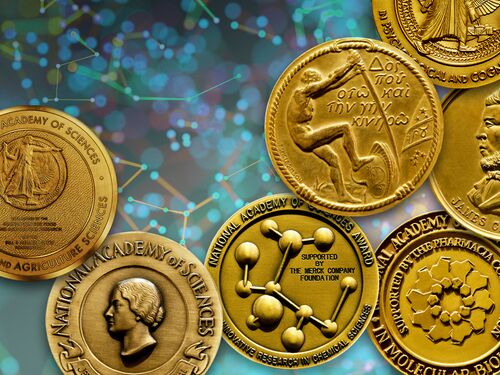
WASHINGTON — The National Academy of Sciences has announced that 19 distinguished scientists will be recognized this year for exceptional contributions across a broad spectrum of disciplines, including the physical, biological, social, and medical sciences.
Roland Bürgmann of the University of California, Berkeley, has been selected to receive the Arthur L. Day Prize and Lectureship in recognition of his groundbreaking work in earthquake science. The honor includes a $50,000 monetary award as well as funding to support a series of public Day Lectures highlighting his research.
Deanna M. Barch from Washington University in St. Louis and Tor D. Wager of Dartmouth College will each be awarded an Atkinson Prize in Psychological and Cognitive Sciences. The Academy cited Barch for her influential research advancing the understanding of developmental psychopathology, while Wager was recognized for pioneering studies that illuminate how the brain shapes pain perception, emotion, and belief. Each recipient will receive a $100,000 prize.
Jonas Zmuidzinas of the California Institute of Technology has been named the recipient of the James Craig Watson Medal for his seminal role in designing and developing advanced instruments and technologies that have propelled modern astrophysics. The award includes a $25,000 prize along with an additional $50,000 to support ongoing research.
Mike Stratton from the Wellcome Sanger Institute will receive the Jessie Stevenson Kovalenko Medal for his transformative contributions to cancer genomics. The medal is accompanied by a $25,000 prize and an extra $50,000 designated for research activities.
Joseph Henrich of Harvard University has been chosen for the John J. Carty Award for the Advancement of Science, this year awarded in the social sciences excluding economics. He is being honored for his foundational work spanning anthropology, cognitive science, and psychology. The award includes a medal and a $25,000 prize.
Roman Bezrukavnikov from the Massachusetts Institute of Technology will be honored with the Maryam Mirzakhani Prize in Mathematics for his influential contributions to geometric representation theory. The prize carries a $20,000 award.
The Michael and Sheila Held Prize will be shared by Irit Dveer Dinur of the Institute for Advanced Study and the Weizmann Institute, Subhash Khot of New York University, Guy Kindler of the Hebrew University of Jerusalem, Dor Minzer of the Massachusetts Institute of Technology, and Muli Safra of Tel Aviv University. The group is being recognized for advancing fundamental understanding in theoretical computer science, with the $100,000 prize divided among the recipients.
Ilya Sutskever of Safe Superintelligence, Inc. will receive the NAS Award for the Industrial Application of Science for his revolutionary contributions to artificial intelligence and its real-world applications. This year’s award, focused on artificial intelligence, includes a $25,000 prize.
Benjamin F. Cravatt from the Scripps Research Institute has been selected for the NAS Award in Chemical Sciences in recognition of his foundational discoveries related to enzyme function and how its disruption contributes to disease. The award includes a medal and a $15,000 prize.
Philip J. Kranzusch of the Dana-Farber Cancer Institute and Harvard Medical School will receive the NAS Award in Molecular Biology for his groundbreaking research that has significantly advanced understanding of innate immunity. He will be presented with a medal and a $25,000 prize.
James C. Schnable from the University of Nebraska–Lincoln has been named the recipient of the NAS Prize in Food and Agriculture Sciences. He is being honored for major breakthroughs in plant genomics and quantitative genetics that are helping to transform modern agriculture. The prize includes a medal and $100,000.
Sebastian Seung of Princeton University will receive the Pradel Research Award for his transformative contributions to computational neuroscience. The award provides $50,000 in research funding to support further work in the field.
M.J. Crockett of Princeton University and Jason D. Yeatman of Stanford University will each be awarded a Troland Research Award. Crockett is recognized for pioneering work toward a mechanistic theory of moral cognition, while Yeatman is honored for advancing the scientific understanding of literacy and improving evidence-based treatments for reading disorders. Each award includes $75,000 to support continued research.
All award recipients will be formally honored during a ceremony on April 26, held as part of the National Academy of Sciences’ 163rd annual meeting.
Founded in 1863 under a congressional charter signed by President Abraham Lincoln, the National Academy of Sciences is a private, nonprofit organization dedicated to recognizing excellence in scientific research. Through election to membership and the presentation of awards, the Academy, together with the National Academy of Engineering and the National Academy of Medicine, also provides independent advice on science, engineering, and health policy to the federal government and other institutions.


Leave a Reply