
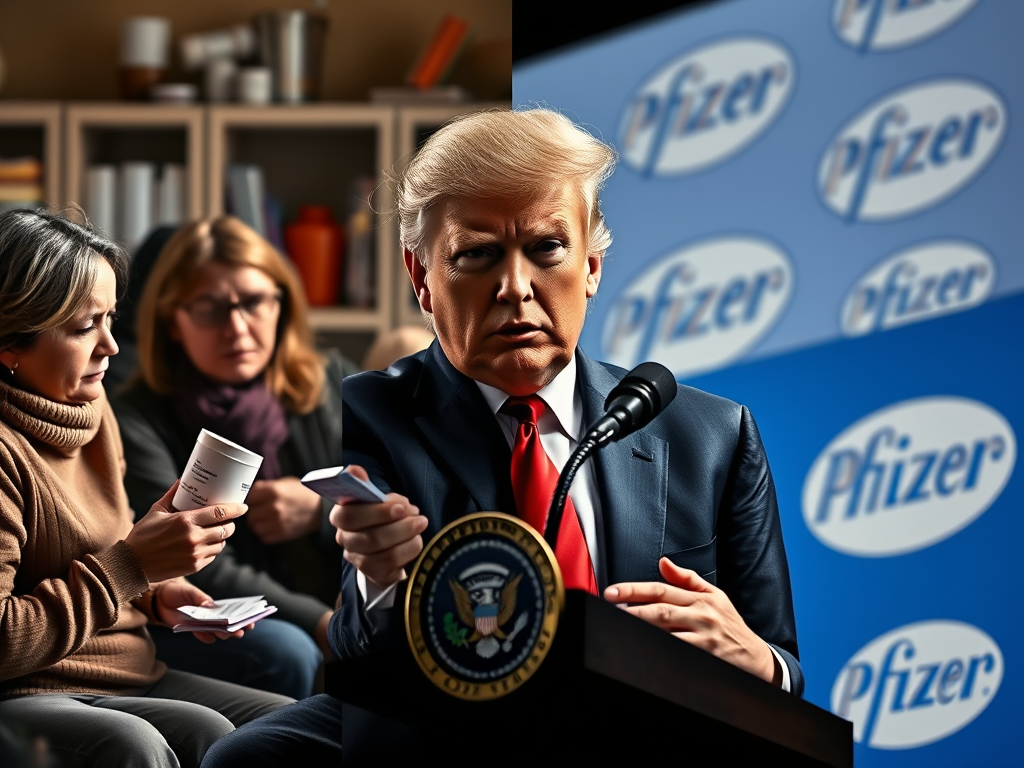
Every year, over nine million Americans skip their prescribed medications due to cost concerns. In the United States, people pay up to four times more for new medicines than those living in other wealthy nations. For decades, the high cost of pharmaceuticals has remained one of the most persistent barriers to healthcare access, prompting calls for reform from both policymakers and the public.
On September 30, former U.S. President Donald Trump announced a major deal with pharmaceutical giant Pfizer, aimed at lowering drug costs for Americans. The agreement marked the first tangible effort under Trump’s “most-favored nation” policy, designed to align U.S. drug prices with those in other high-income countries. While the initiative seeks to make medications more affordable, analysts argue that it is unlikely to deliver meaningful reductions and could even create negative ripple effects for global health systems.
Under the new deal, several of Pfizer’s medications will be made available directly to American consumers through a new online platform called TrumpRx, set to launch in 2026. The platform aims to bypass intermediaries such as pharmacy benefit managers and distributors, theoretically lowering costs by reducing markups along the supply chain. On paper, this might seem like a win for consumers. In practice, however, it could exclude a large portion of the population.
About 92% of Americans have health insurance, and most would still find better prices through their existing plans than through TrumpRx. For uninsured individuals, even the discounted rates could remain out of reach. Take Pfizer’s anti-inflammatory drug tofacitinib, marketed as Xeljanz, which will still cost approximately $3,600 per month even after the proposed discount. For families living paycheck to paycheck, such costs remain insurmountable.
Supporters of the policy claim it will also reduce prices paid by Medicaid, the public insurance program for low-income Americans. But experts are skeptical. Medicaid already negotiates significant rebates and discounts, and there is little evidence that the TrumpRx model will outperform current arrangements. Financially, the impact on the pharmaceutical industry appears minimal as well — Pfizer’s stock price climbed nearly 15% in the five trading days following the announcement, suggesting that investors see the deal as favorable to the company rather than to consumers.
At the heart of Trump’s broader strategy lies the notion of “ending global freeloading.” He has long argued that other wealthy countries benefit from artificially low drug prices while American consumers bear the bulk of research and development (R&D) costs. His proposed solution involves lowering domestic prices while pressuring other high-income countries to pay more, supposedly to ensure fairness and preserve innovation incentives. But critics point out that forcing other nations to shoulder higher prices is neither equitable nor sustainable.
Linking U.S. drug prices directly to those of other nations might not work as intended. Because the United States represents the largest pharmaceutical market globally, drugmakers have multiple strategies to shield their pricing power. Many negotiate confidential discounts with national health systems to prevent price transparency. Some could even withdraw products from certain markets to prevent low international prices from influencing U.S. negotiations. As a result, Trump’s “most-favored nation” policy could end up being largely symbolic, without real benefits for American consumers.
The potential diplomatic consequences are also significant. Trump’s combination of pressure tactics and tariff threats may push foreign governments to accept higher drug prices. Yet, if even partially successful, this shift could strain the healthcare budgets of other developed nations, limiting their ability to fund broader health initiatives such as hospital infrastructure, preventive care, and universal coverage. The idea that these countries are currently “underpaying” is also misleading — in places like England, the public already pays substantial prices for medicines, even with strict price controls.
To achieve real progress, experts suggest that the United States should develop its own comprehensive drug price regulation framework. One approach could involve tying prices to independent value assessments, such as those conducted by the Institute for Clinical and Economic Review (ICER) in Boston. ICER evaluates whether drugs provide sufficient health benefits relative to their costs, offering a rational basis for pricing decisions. However, implementing such a system would require addressing the complexity of the U.S. pharmaceutical market — a web of intermediaries, rebates, and opaque pricing agreements that have long resisted reform.
Currently, even Medicare, the federal insurance program for seniors, has limited power to negotiate prices. Although recent reforms allow negotiation for certain high-cost drugs, the scope remains narrow. Without structural changes to expand this authority, efforts to rein in costs will likely remain superficial.
The broader issue extends beyond pricing policy. Globally, the pharmaceutical industry spends hundreds of billions of dollars annually on R&D, driven by the promise of high returns. Yet, many newly approved drugs offer only modest benefits. For instance, the cancer drug regorafenib (Stivarga) extends life expectancy by just six weeks and costs roughly $60,000 per course. Similarly, the Alzheimer’s drug aducanumab (Aduhelm) was approved based on its ability to reduce brain plaques, despite no conclusive evidence of cognitive improvement. Such examples highlight the disconnect between drug prices and real-world patient outcomes.
A more sustainable path would involve linking prices to measurable health benefits. If pharmaceutical companies were rewarded based on proven effectiveness, the market would naturally prioritize innovations that make a real difference in patients’ lives. Redirecting savings from overpriced drugs could then help fund other pressing healthcare needs, such as reducing hospital wait times, expanding preventive programs, and improving access for underserved populations.
In the end, whether Trump’s policy transforms into meaningful reform or remains political rhetoric is uncertain. What is clear, however, is that the global drug pricing system is overdue for a reset. Accepting lower prices — and possibly fewer new but more effective drugs — could be a necessary trade-off for achieving broader health equity. For both the United States and the world, the true challenge lies not in protecting pharmaceutical profits, but in ensuring that every person can afford the medicine they need to live a healthy life.





Leave a Reply