

Described as nutty, chocolatey, earthy, and sometimes even slightly fishy, civet coffee has long fascinated coffee lovers and scientists alike. Exceptionally rare and strikingly expensive, this coffee can sell for more than 100 times the price of standard brews. Its beans are produced in an unusual way: they are eaten and excreted by civet cats, then collected, cleaned, and roasted to create a brew with a singular flavor profile.
For years, researchers have been intrigued by what gives civet coffee its unique taste. Now, a new study suggests that the beans, after passing through the civet’s digestive system, contain unusually high levels of two compounds commonly used as flavoring agents in dairy products. These compounds may partly explain the coffee’s distinctive taste.
Civet coffee, known as Kopi Luwak in Indonesia, where the practice originated, is made by Asian palm civets (Paradoxurus hermaphroditus) that consume the fruit, or cherries, of coffee plants. The seeds inside these cherries are not digested and are excreted intact. Once collected from the civets’ feces, the beans are thoroughly cleaned and roasted. This labor-intensive process results in a coffee that can command prices of over $1,300 per kilogram for the beans, or around $75 for a single cup. The exclusivity and expense of civet coffee have fueled a tourism industry in Asia, as well as commercial farms that often keep civets in cages to mass-produce the beans. These practices have raised significant animal welfare concerns and may even contribute to the risk of emerging infectious diseases, according to groups such as the UK-based charity The Civet Project.
A research team led by zoologist Palatty Allesh Sinu at the Central University of Kerala, India, studied civet coffee in the wild, in the Kodagu district where civets live freely. By analyzing beans collected from wild civet feces, the scientists aimed to understand what makes civet coffee so flavorful and to explore alternatives that could protect the animals. “If we can identify the digestive and fermentation enzymes responsible for the unique flavor, it might be possible to produce civet coffee artificially,” says Sinu.
Previous studies on civet coffee have examined the beans’ physical changes and chemical composition. A 2004 study reported that civet-processed beans often appear pitted and fragile due to exposure to gastric juices. More recent research, in 2019, showed that roasted civet beans are lower in protein and higher in fat than conventional roasted beans. However, the precise chemical reasons for their unique taste have remained unclear.
In the new study, published in Scientific Reports, researchers compared 68 samples of unroasted coffee beans collected from wild civet feces with beans directly harvested from coffee plants. Using gas-chromatography-mass spectrometry, they discovered that the civet-processed beans contained higher concentrations of caprylic acid and capric acid—fatty acids associated with goat-like flavors in dairy products. The researchers suggest that these compounds result from the civet’s digestion and fermentation processes, with gut bacteria such as Gluconobacter and their enzymes playing a key role.
While these fatty acids may contribute to civet coffee’s distinctive flavor, experts note that many other chemical compounds and factors are involved in creating the brew’s complex taste. Melanie-Jayne Howes, a biological chemist at the Royal Botanic Gardens, Kew, explains: “The chemistry of coffee flavor is incredibly complex. Fatty acids are just one piece of the puzzle. There are numerous other compounds interacting in ways that affect aroma and taste.” Howes herself recently published research exploring the many intricate compounds that define coffee flavor.
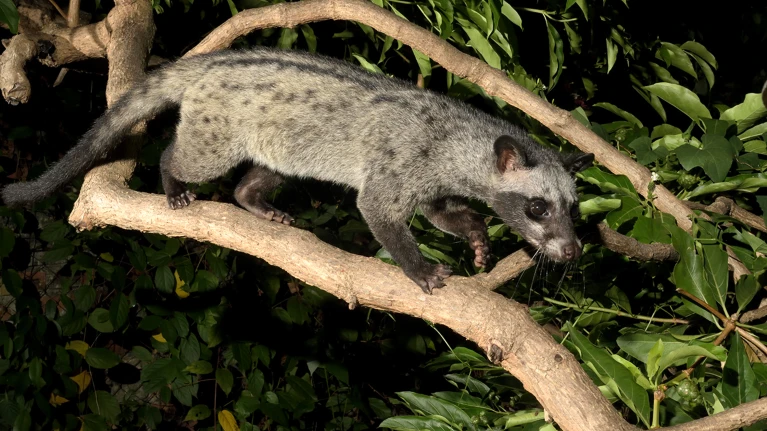
The study also highlighted behavioral factors. Wild civets tend to select the ripest and largest coffee cherries, which could further influence the flavor profile of the beans. The current research focused on Robusta coffee, which is commonly grown in the Kodagu region. “A similar study on Arabica coffee is necessary,” Sinu notes, “because Arabica is more frequently used in commercial civet coffee production.” The researchers also suggest that future studies could explore how roasting affects the fatty acids and other compounds identified in the beans.
Civet coffee continues to captivate both coffee aficionados and scientists, combining unusual production methods, high economic value, and a unique taste profile. As researchers uncover more about the chemical transformations that occur during the beans’ journey through civets’ digestive systems, there is potential to replicate the flavor without involving live animals. Such innovation could address ethical concerns, reduce environmental pressures, and allow more people to enjoy this rare coffee without compromising animal welfare.
With its rich, exotic taste and unusual backstory, civet coffee remains one of the world’s most talked-about and expensive beverages. Thanks to studies like this, the mystery behind its flavor is slowly being revealed, offering insights into both the science of taste and the future of ethical coffee production.





Leave a Reply