
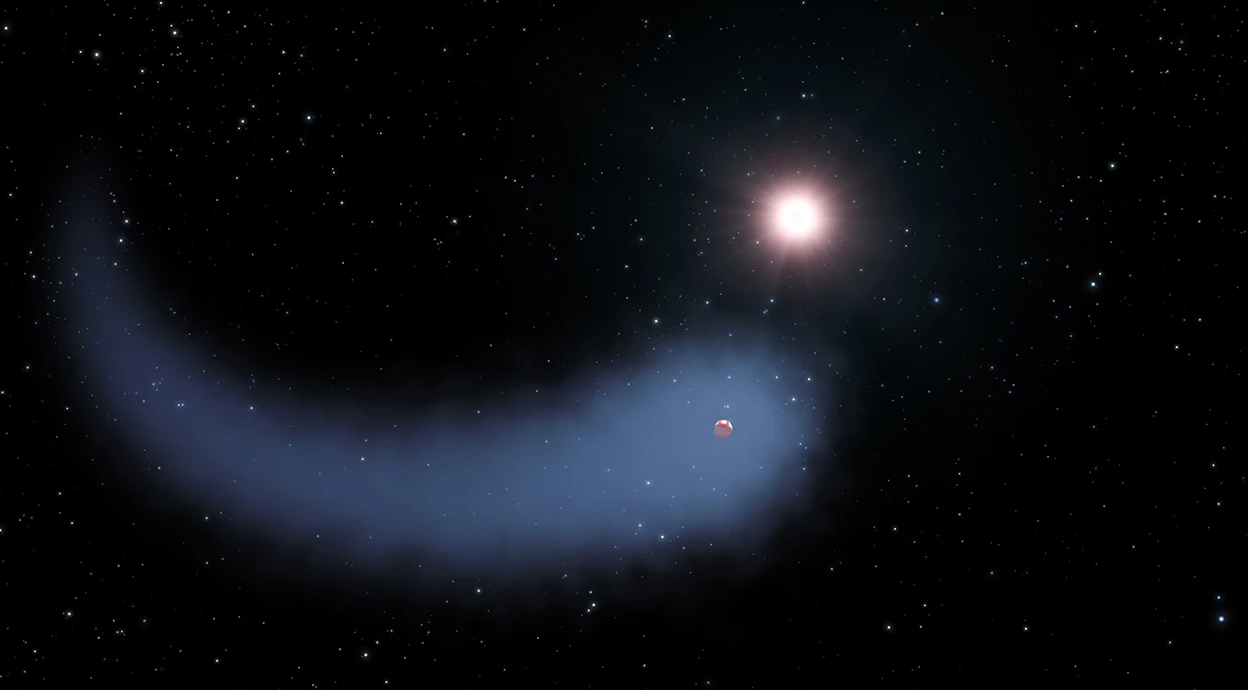
In the three decades since astronomers first confirmed the existence of exoplanets—planets orbiting stars beyond our Sun—telescopes have discovered thousands of these distant worlds. One of the most striking revelations has been their sheer diversity. Some are searingly hot lava planets with atmospheres made of vaporized rock, others are vast ocean worlds, and a few could even resemble Earth in some ways. This diversity challenges our understanding of how planets form and evolve and raises tantalizing questions about the potential for life elsewhere in the universe.
The James Webb Space Telescope (JWST), launched in 2021, has been transformative in studying these alien atmospheres. For the first time, astronomers can observe clouds, haze layers, and chemical signatures in exoplanet atmospheres with unprecedented clarity. Researchers are beginning to map how winds, turbulence, and chemical processes distribute elements across these distant planets, revealing phenomena that are entirely absent on Earth. These observations not only inform us about planetary formation but also hint at the potential origins of life in environments vastly different from our own. However, many findings—including signs of unusual compounds—pose significant interpretive challenges.
To fully understand these discoveries, the space-science community needs to engage experts from multiple disciplines. Collaboration between exoplanet researchers and scientists who study Earth’s atmosphere or those of other Solar System planets is increasingly essential. Likewise, building stronger connections between experimentalists, theoretical modelers, and observational astronomers will help interpret these complex datasets.
The Role of Photochemistry
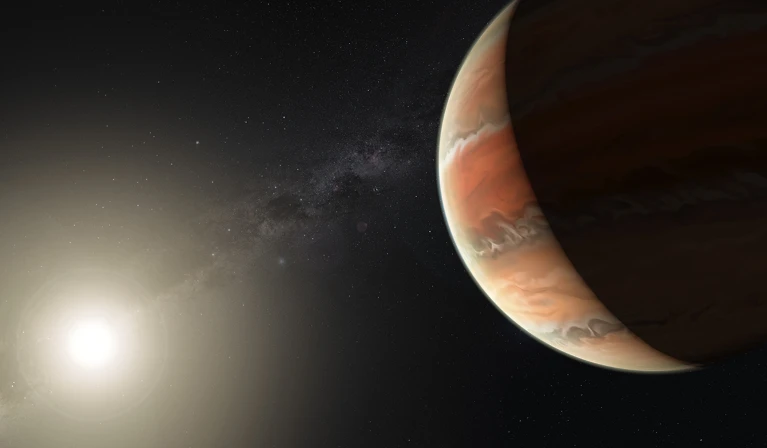
Central to decoding exoplanet atmospheres is the study of photochemistry, or chemical reactions driven by high-energy light from nearby stars. One of JWST’s earliest observations focused on WASP-39 b, a gas giant roughly the size of Jupiter that orbits a Sun-like star about 700 light-years away. Spectroscopic analysis revealed the expected signatures of molecules like carbon dioxide and water. However, astronomers were puzzled by an unexpected opaque feature around 4 micrometers.
Because the dataset was open source, hundreds of astronomers collaborated in 2022 using Slack to identify the chemical responsible for this anomaly. After testing numerous possibilities, the culprit was identified as sulfur dioxide. This discovery was surprising, as sulfur dioxide is thought to be rare in hydrogen-dominated gas giants. The only process capable of producing it in sufficient quantities appeared to be photochemistry, illustrating the importance of understanding star-driven chemical reactions in exoplanet atmospheres.
This example highlights the need for more sophisticated photochemical models. Current models are limited by the lack of comprehensive data on how reaction rates and absorption properties change under the extreme temperatures and pressures present on exoplanets. Many molecules observed in these environments are unfamiliar from an Earth-centric perspective, making laboratory and theoretical studies crucial.
Improving Atmospheric Models
Identifying a molecule in an exoplanet atmosphere is only the first step; understanding how it formed is far more complex. Molecules may be transported from deep within the planet, or multiple chemical pathways could produce the same compound, possibly through mechanisms not observed in the Solar System. Current models are often based on Earth-centric physics and chemistry, which may fail to capture processes unique to exoplanets.
Several physical factors need more accurate representation in models. The transport of molecules between an atmosphere and a planet’s surface or interior, along with the planet’s rotation and orbit, can profoundly affect chemical distribution. Some exoplanets are tidally locked, meaning one hemisphere constantly faces the star while the other remains in darkness. This extreme contrast creates atmospheric conditions unlike anything on Earth, requiring models that account for highly uneven distributions of heat and chemicals.
Equally important are the photochemical parameters that define how molecules respond to stellar radiation and interact with each other. These parameters vary with temperature and pressure, conditions that differ widely from those in the Solar System. Accurately simulating these factors requires experimental or computational determination of reaction rates, ideally under conditions analogous to those on the planet of interest. However, many reactions lack such data, forcing models to rely on estimates, while numerous unknown reactions may still await discovery.

Expanding Interdisciplinary Research
Laboratory studies of exoplanet atmospheres have so far focused on light-absorption properties of specific molecules, such as titanium oxide or phosphine, and on haze particles that influence the propagation of stellar radiation. These experiments are conducted in chambers simulating the extreme temperatures, pressures, and chemical compositions observed on exoplanets. Light sources and plasma are used to mimic stellar radiation, flares, or lightning, helping scientists understand how simple analog atmospheres can produce complex chemical products.
Yet, existing lab studies are insufficient for constructing comprehensive reaction networks, which are essential to predict the chemical composition of atmospheres. To develop these networks, the exoplanet research community must determine the laboratory technologies needed to measure reaction rates and pathways. Equipment designed for Earth-based atmospheric chemistry and combustion studies can be adapted for exoplanet research, extending the range of pressures and temperatures that can be investigated. For instance, combustion reactors and shock tubes can be repurposed to study species such as sulfur compounds or methane, which may be more abundant on other planets than oxygen.
Expanding the use of Earth-science labs to include exoplanet researchers would maximize the value of these costly facilities. Ultimately, dedicated laboratories for exoplanet atmospheres will be necessary. New measurement techniques will also be required to study exotic molecules or particles, a goal supported by planned observatories such as the Habitable Worlds Observatory and the mid-infrared Large Interferometer for Exoplanets. Lessons from other fields, like the ion-imaging technique used in combustion research at Sandia National Laboratories, suggest that technological advances can provide precise, molecular-level data for complex reaction networks, benefiting both exoplanet and Earth-science research.
Theoretical Approaches and First Principles
Some molecules and reactions are too dangerous, slow, or extreme to study experimentally. In these cases, theoretical chemistry provides a pathway to determine key reaction parameters across a wide range of conditions. Advances in computational power and artificial intelligence have greatly improved the accuracy and efficiency of these calculations. Nevertheless, reactions involving large or heavy molecules remain challenging to predict.
Validation is essential. Computational results must be cross-checked with multiple theoretical methods and, where possible, experimental data. Once verified, these parameters can be extrapolated to conditions inaccessible in the laboratory, including extreme pressures, temperatures, or highly reactive molecules such as phosphine or hydrazine.
Establishing Evaluation Panels
Accurate reaction parameters must be carefully integrated into atmospheric models. On Earth, committees such as those at NASA’s Jet Propulsion Laboratory and the International Union of Pure and Applied Chemistry review and recommend reaction parameters, ensuring consistency across models. Similar oversight should be established for exoplanet research, ideally through international collaboration among space agencies and existing evaluation panels. This process would foster interdisciplinary knowledge sharing and improve model reliability.
Strengthening Collaboration and Funding
Closer collaboration between observational astronomers, experimental chemists, and modelers is critical. Historically, such cooperation has been vital, for example, in identifying the role of chlorofluorocarbons in depleting Earth’s ozone layer. Workshops in Europe and the United States now aim to integrate these communities for exoplanet research, with Earth scientists contributing laboratory expertise to study alien chemistries.
Funding agencies play a key role in breaking down disciplinary silos. Programs like NASA’s Exoplanet Exploration Program and European Research Council synergy grants encourage interdisciplinary projects. The UK’s National Centre for Atmospheric Science and National Centre for Earth Observation provide positive examples, maintaining cross-disciplinary infrastructure that allows rapid responses to environmental emergencies. Governments should adopt similar strategies to support exoplanet-atmosphere research, enabling scientists to decode the enormous amount of data JWST and future missions are generating.
Exploring exoplanet atmospheres may not immediately impact our daily lives, but it is essential for understanding how planets form, evolve, and perhaps how life arises. With sustained interdisciplinary collaboration, technological innovation, and strategic funding, scientists can fully leverage the wealth of data now within reach, uncovering the secrets of worlds beyond our own.





Leave a Reply