
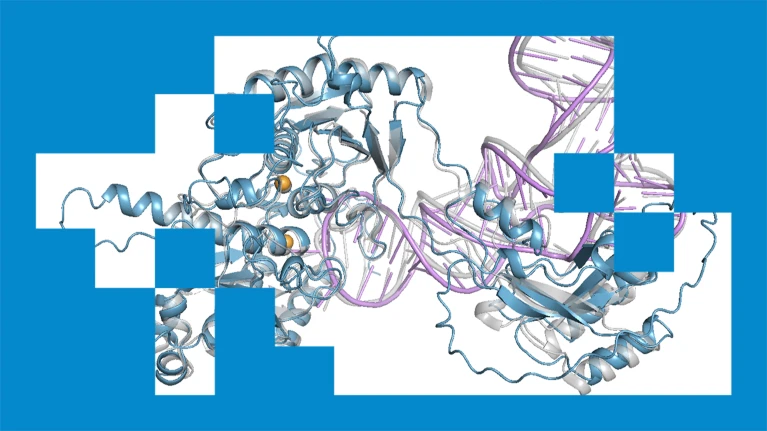
In a development poised to reshape computational biology, scientists have unveiled a preview of a new open-source artificial intelligence (AI) system capable of predicting the three-dimensional structures of proteins. Named OpenFold3, this tool aims to rival Google DeepMind’s landmark AlphaFold3, which has already transformed protein structure prediction and drug discovery.
OpenFold3 was developed by the OpenFold Consortium, a non-profit collaboration bringing together academic institutions and private research organizations, headquartered in Davis, California. The AI system analyzes proteins’ amino acid sequences to generate their 3D structures and models their interactions with other biomolecules, including drugs, DNA, and potential therapeutic compounds.
Although OpenFold3 does not yet offer all the advanced functionalities of AlphaFold3, the team behind it emphasized the urgency of providing the community with early access. “We wanted to release something for researchers as soon as possible,” says Woody Sherman, chair of the consortium’s executive committee and chief innovation officer at Psivant Therapeutics in Boston. “The feedback we receive from the community will be invaluable in refining and improving the model.”
Early Access and Preview Release
OpenFold3’s preview version allows researchers and pharmaceutical companies to access its code and begin experimenting with the system. Unlike AlphaFold3, whose initial release was limited to academic use, OpenFold3 is fully open to both academic and commercial users. Sherman notes, “This is a major step forward in democratizing AI tools for structural biology. By opening access, we hope to accelerate innovation across the field.”
The preview release is intended to provide a “flavor” of OpenFold3, allowing researchers to integrate it into their workflows, build auxiliary tools, and contribute feedback for further development. “We’re getting very close to parity with AlphaFold3,” Sherman adds. “With just a little more work, we believe OpenFold3 can fully match its capabilities.”
Researchers are already eager to test the system. Stephanie Wankowicz, a computational structural biologist at Vanderbilt University, says, “I’m excited to evaluate OpenFold3 and see how it compares to existing models. Open-source alternatives offer opportunities to experiment and tailor the AI to specific research needs.”
Building on a Legacy of Open-Source AI
OpenFold3 is part of a broader movement to create open-source alternatives to proprietary AI models in structural biology. This push began in May 2024 when DeepMind launched AlphaFold3 but did not initially release the underlying code. The decision drew criticism from the scientific community for limiting transparency and accessibility. By November 2024, DeepMind made AlphaFold3’s code and model weights available to academic researchers, though commercial use remains restricted.
In parallel, AI researchers at MIT, led by Regina Barzilay, released an open-access model called Boltz2, which predicts protein structures and estimates binding affinities with small ligands. Barzilay notes that open-source models like Boltz2 have already provided tangible benefits to researchers. “While AlphaFold3 was a breakthrough, open-source systems have become indispensable as flexible resources for experimentation, replication, and adaptation to specialized datasets,” she says. “OpenFold3 adds yet another valuable option for the research community.”
Advancing Understanding Through Comparison
Experts suggest that comparing OpenFold3 with AlphaFold3 and Boltz2 will provide new insights into how AI models predict protein folding and interactions. Wankowicz explains, “Having multiple open-source models allows us to dissect the algorithmic components, understand their respective contributions, and determine which features are most critical for different predictive tasks.”
This comparative approach could accelerate the discovery of novel drugs and treatments. Several pharmaceutical and biotechnology companies have already committed to leveraging OpenFold3 for designing therapies targeting autoimmune disorders, cell therapies, and even molecules to protect plants and crops.
Technical Foundations and Training
OpenFold3 has been trained on over 300,000 molecular structures as well as a synthetic dataset comprising more than 40 million structures. The project has so far required an investment of $17 million. Moving forward, the consortium plans to expand the training dataset to include additional molecular types, such as water molecules, and integrate properties like thermal stability and binding affinities.
“Predicting protein binding affinity is one of our next major goals,” Sherman says. “We also aim to incorporate additional protein characteristics to enhance the model’s predictive power for both biological and industrial applications.”
Democratizing Protein Structure Prediction
One of the most significant aspects of OpenFold3 is its accessibility. By making the model fully open-source, the consortium hopes to eliminate barriers that have historically limited smaller research groups or startups from leveraging advanced AI for structural biology. This could potentially accelerate discoveries in drug development, vaccine research, and biotechnology.
Sherman emphasizes that the preview release is just the beginning. “OpenFold3 will continue to evolve,” he says. “We expect multiple updates over the coming months, informed by community feedback and ongoing technical improvements. The goal is to provide a robust, open-source tool that complements existing models while remaining flexible for new research directions.”
A Broader Trend in Open-Source Science
The release of OpenFold3 reflects a broader trend in science and AI: the movement toward open access and collaborative development. Open-source models allow researchers to verify results, reproduce experiments, and build upon existing work without the limitations of proprietary software.
Barzilay observes, “The more we make these models accessible, the faster the field can progress. OpenFold3 is an example of how collaboration and transparency can drive both scientific discovery and practical applications.”
Wankowicz adds that access to multiple open-source AI systems will help uncover “the puzzle pieces” that determine algorithm performance, enabling more nuanced research into protein folding, molecular interactions, and drug design.
Future Applications and Impact
The potential applications of OpenFold3 extend far beyond traditional laboratory research. By facilitating rapid and accurate predictions of protein structures, the tool could accelerate the design of targeted therapies, optimize agricultural biotechnology solutions, and contribute to environmental protection initiatives.
Several companies are already exploring the use of OpenFold3 in projects aimed at developing new treatments for autoimmune diseases and advancing cell therapy technologies. Others are using it to create molecules that enhance crop resilience, showcasing the tool’s versatility.
Sherman stresses that OpenFold3 will remain under active development. “Our commitment is long-term,” he says. “We will continuously update the model, improve its accuracy, and expand its capabilities. OpenFold3 is designed not just as a one-time release, but as an evolving resource for the scientific community.”
Conclusion
OpenFold3 represents a significant milestone in the democratization of AI for structural biology. By providing open access to a sophisticated protein-folding model, the OpenFold Consortium is empowering researchers worldwide to push the boundaries of scientific discovery.
While AlphaFold3 set a high benchmark, OpenFold3 demonstrates that open-source alternatives can rival proprietary models in both capability and accessibility. As more researchers integrate these tools into their work, the pace of innovation in molecular biology, drug design, and biotechnology is likely to accelerate.
With its preview release, OpenFold3 has already generated excitement in the research community, and the upcoming full release promises to broaden its impact even further. For scientists, pharmaceutical companies, and biotech innovators alike, OpenFold3 offers a glimpse of the future: a world where powerful AI tools for understanding and manipulating biomolecules are accessible to all.





Leave a Reply