
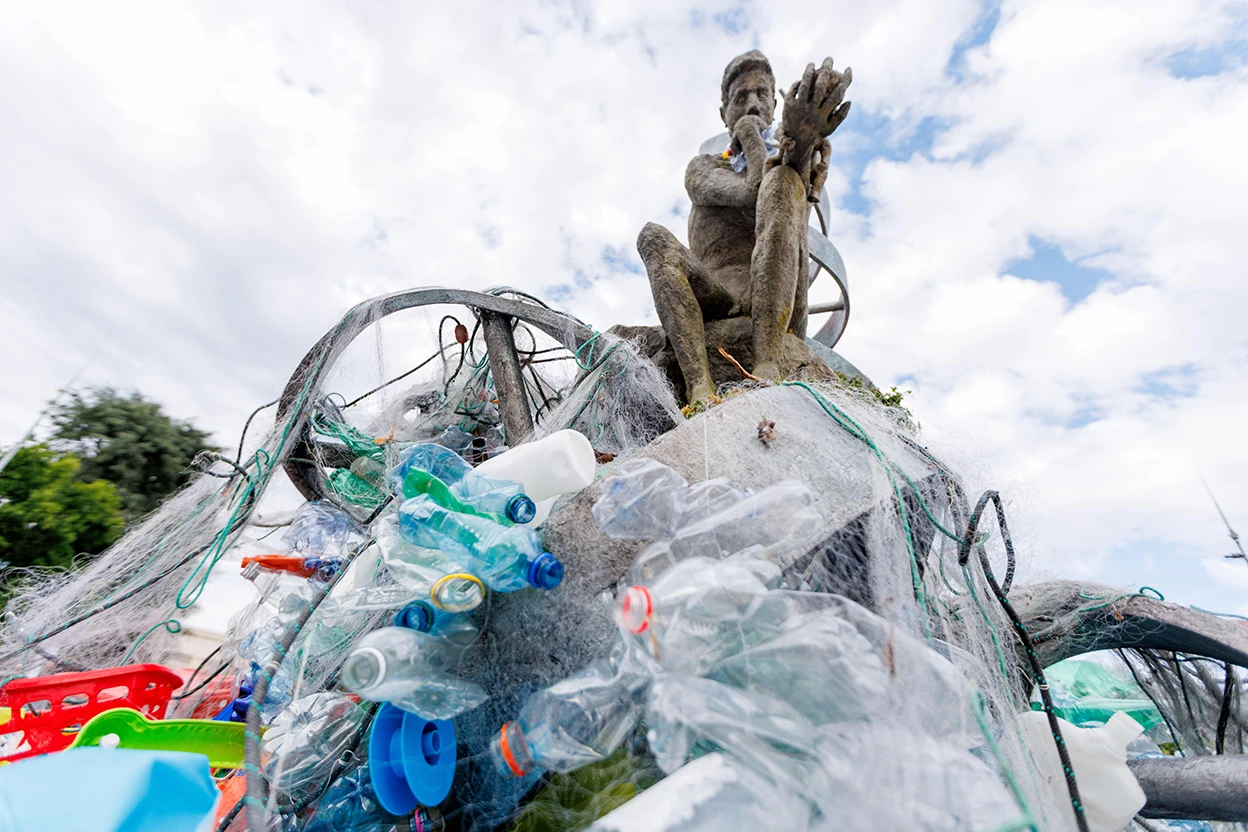
On 15 August in Geneva, Switzerland, a fifth round of negotiations aimed at creating a multilateral treaty to reduce plastic pollution came to an abrupt halt. The committee chair announced the end of discussions, noting that no draft treaty had been produced. Governments were unable to reach consensus on the proposed articles, and no further negotiations were planned.
This setback exposes a persistent flaw in environmental diplomacy: consensus-driven processes often dilute action to the lowest common denominator. Rather than addressing root causes, agreements frequently focus on symptoms, resulting in extensive activity with little tangible impact. This phenomenon, which we term “institutional paralysis,” demonstrates the urgent need for international organizations to rethink their approach and to act more decisively. To achieve this, institutions must leverage political and governance research more effectively and apply this knowledge to drive meaningful change.
Breaking the Paralysis
To overcome institutional stagnation in the environmental sphere, we propose a standing, government-mandated process to evaluate the effectiveness of global environmental treaties and the institutions overseeing them. This mechanism would assess the fitness of individual and interconnected bodies, identify what works and what does not, and offer actionable recommendations for reform at the United Nations level.
Currently, international environmental institutions resemble deer frozen in headlights: acutely aware of urgent crises, yet incapable of decisive action. Take the UN Framework Convention on Climate Change (UNFCCC), for example. Even full implementation of existing commitments would fall short of preventing dangerous climate outcomes. Similarly, the Convention on Biological Diversity sets ambitious conservation targets for protected areas, but expanding these zones does little to counter the accelerating loss of species driven by climate change. These failures are not merely a lack of ambition; they reflect structural design flaws. Existing policies, even when robust, are insufficient to address the complexity and scale of today’s interconnected environmental crises.
Institutional paralysis manifests as a persistent inability to act, adapt, or achieve stated goals, despite ongoing procedural activity. Like the Red Queen in Alice Through the Looking Glass, environmental institutions run in place — activity continues, but real progress stagnates. Rather than confronting their limitations, many institutions resort to symbolic gestures to maintain relevance. For example, in July in Zimbabwe, the Ramsar Convention on Wetlands finalized a strategic plan that largely reaffirmed decisions made two decades ago. Likewise, the International Whaling Commission continues to frame previously resolved issues, such as widespread whaling, as ongoing, creating the illusion of progress.
Some organizations take riskier approaches. The London Convention and its 1996 Protocol on marine pollution have begun exploring marine geoengineering, including ocean fertilization to stimulate phytoplankton growth and measures to enhance ocean alkalinity for carbon dioxide absorption. Despite clear ecological risks, such interventions are still being considered. This illustrates a broader problem: environmental institutions often navigate trade-offs that endanger the very systems they are designed to protect, undermining their own effectiveness.
Understanding the Roots of Paralysis
Institutional paralysis occurs when organizations face challenges beyond their original mandates or capabilities. Climate change exemplifies this issue: conditions today are far more severe than in 1992, when the UNFCCC was established, exceeding the body’s capacity to manage responses effectively. Although scientific knowledge about environmental systems has expanded exponentially, institutions are increasingly overloaded with information, including social science insights that highlight issues of justice and equity alongside natural science concerns.
Despite repeated warnings from scientists, such as “warnings to humanity,” attention quickly wanes, while the scope of problems continues to grow. Public confidence erodes as institutional responses fail to keep pace. Overburdened organizations also face pressures beyond their mandates. For instance, the World Heritage Convention lists numerous marine sites, including coral reefs, as protected areas. Yet the convention lacks authority to address climate-driven threats like ocean warming and acidification, leaving sites vulnerable despite extensive scientific evidence available to guide protection.
Limited resources exacerbate the problem. Most international environmental institutions are chronically underfunded. Climate-focused initiatives typically receive priority over biodiversity, even though the two are intrinsically linked. Geopolitical dynamics further influence funding and negotiations. Major powers such as the United States, China, Russia, and the European Union heavily shape treaty outcomes, while countries dependent on fossil fuels may act as deliberate blockers. Differing socio-economic contexts deepen paralysis, reinforcing institutional inertia.
Even when capacity is limited, institutions often maintain a façade of progress rather than acknowledge shortcomings. Many adopt technologically driven solutions, such as carbon capture or large-scale afforestation, as low-resistance strategies. While politically safer, these approaches frequently create additional problems rather than solving existing ones.
A Call for Independent Assessment
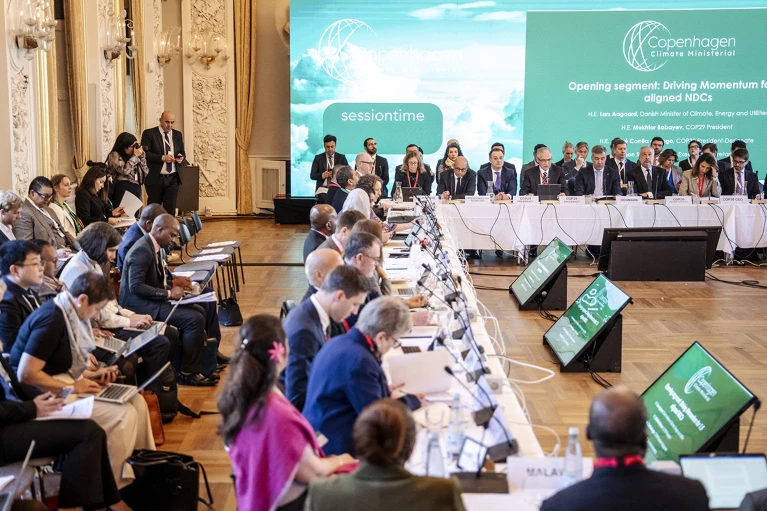
Reforming environmental institutions requires addressing not only science-to-policy translation but also the political dynamics within these bodies. Piecemeal fixes and procedural reviews have proven inadequate. For instance, the Global Stocktake shows the world is falling short of the Paris Agreement goals, yet produces little concrete action. Global environmental assessments across climate, biodiversity, oceans, water, land, and waste often remain underutilized, repeating the same message: more resources, more implementation, more coordination — all while leaving institutions fundamentally unchanged.
What is missing is authoritative scientific guidance that considers institutions as a whole system. Governments should establish an independent expert body empowered to produce binding recommendations for environmental treaties and institutions, ideally under the UN Environment Assembly. This body should evaluate institutions collectively, examining their interconnections and overall contributions to overarching goals like maintaining Earth’s life-support systems. Recommendations might include transforming, merging, or retiring institutions, with decisions guided by whether the collective system is effective.
The body should also reassess consensus-based decision-making. The collapse of the plastics treaty negotiations illustrates that unanimous agreement may no longer be viable. Allowing a subset of nations to pursue action could enable urgent measures. The assessment should guide inter-institutional coordination, resource allocation, and mandate alignment, empowering overburdened institutions to tackle root causes rather than passively observing outcomes.
Resources should be optimized across institutions, with mechanisms for sharing or redirecting funds as needed. Proposals such as establishing a “law of the atmosphere” to regulate environmental impacts could be revisited, and excessively large problems might be split among several institutions to improve management. When organizations no longer serve their purpose, retiring them should be normalized, freeing space and resources for new, more effective institutions. Parties should be required to respond formally to assessment recommendations, outlining how they will implement them or explaining why not. The UN Environment Assembly could then monitor follow-up, identifying persistent gaps.
While this vision may seem ambitious, it is necessary. Just as reducing emissions is critical to mitigating climate change, institutional reform is essential to addressing the broader environmental crisis. Challenges such as sovereignty, geopolitics, and declining multilateralism are real and difficult to overcome, yet they must be confronted directly. Systematic reform and innovative thinking are the only pathways forward — just as the UN80 Initiative seeks to modernize the United Nations, so too must global environmental governance adapt to meet the demands of a rapidly changing world.





Leave a Reply