
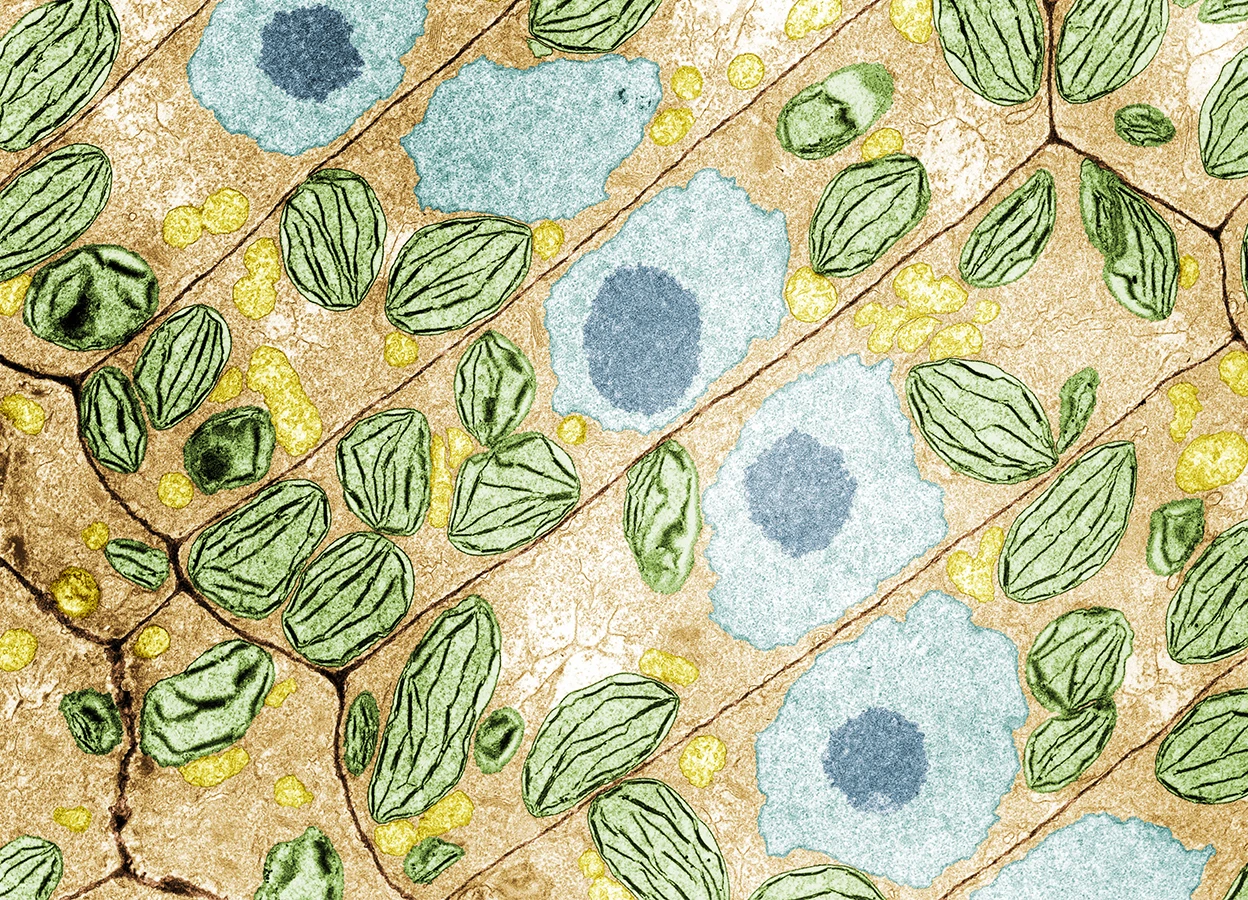
When Robert Hooke first peered through his primitive microscope at a thin slice of cork in 1665, he saw a pattern of tiny chambers. He called them “cells.” What Hooke didn’t realize was that he was only looking at the rigid walls of dead plant cells — not the living interiors that would later fascinate biologists for centuries. For a long time, plant scientists saw these walls as little more than static shells, inert frameworks that merely held the living parts in place.
“For decades, the cell wall was thought to be dead,” says Alice Cheung, a molecular biologist at the University of Massachusetts Amherst. It wasn’t until the late twentieth century that researchers began to realize how dynamic and essential these walls really are. Far from being silent structures, they are vibrant, active participants in plant life — in constant communication with their surroundings.
Today, using powerful molecular and imaging tools, scientists are uncovering how these microscopic fortresses function as living networks. They have discovered that plant cell walls are not passive barriers but information hubs — constantly sensing, signaling, and adapting. This growing body of research is reshaping how we understand plant growth, disease resistance, and even agricultural innovation.
A Wall That Talks Back
Every plant cell wall forms the first line of defense between the organism and its environment. Made largely of intertwined polysaccharides such as cellulose and pectin, these walls are flexible yet remarkably strong. Cellulose acts like steel rods, while pectin — a more complex, jelly-like molecule — provides elasticity and structure.
Charles Anderson, a plant biologist at Pennsylvania State University, likens the wall’s complexity to “a bowl of mixed pasta.” There are countless intertwining strands of sugar chains, each decorated with chemical groups that determine flexibility, strength, and function.
But the wall is not just a fortress; it is also an alarm system. When pathogens such as fungi or bacteria attack, they release enzymes that chew through these polysaccharides. The resulting fragments act as distress signals, alerting the plant’s immune system. Upon detecting the fragments, the plant activates defense genes and produces callose — a special sugar polymer that reinforces weak spots — along with antimicrobial peptides and reactive oxygen species to neutralize invaders.
Turning Defense Into Innovation
Scientists and farmers are now learning to harness these natural defense mechanisms. By spraying crops with molecules derived from algae or fungi cell walls, they can “prime” plants to resist disease before infection occurs. “You activate the plant’s immune response and let it fight off pathogens naturally,” explains Antonio Molina, a plant biologist at the Technical University of Madrid.
Molina helped launch two companies that commercialize these bio-based treatments. The goal is to reduce reliance on chemical fungicides while enhancing sustainable farming practices. However, challenges remain. The effects of these natural treatments often last only a few weeks, meaning repeated applications are needed. And when plants divert energy to defense, growth may temporarily slow down — a trade-off farmers must balance carefully.
Cyril Zipfel, a plant immunologist at the University of Zurich, is taking this concept further. His team studies the intricate molecular signals behind plant immunity to design more targeted, synthetic treatments. Such precision could transform how crops defend themselves, enabling stronger and more predictable responses with fewer side effects.
The Power of Pectin
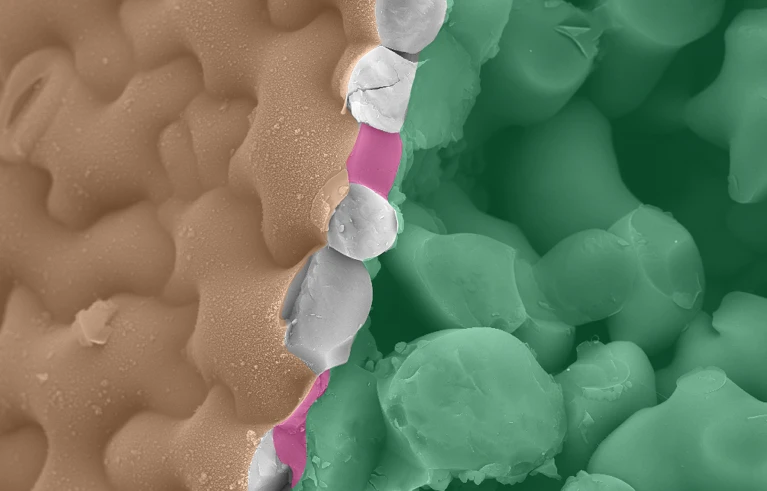
Understanding plant growth has also led researchers back to the cell wall. For a cell to expand, its wall must loosen just enough to allow growth without bursting. This delicate balance depends largely on pectin — one of the most complex molecules in nature.
Sebastian Wolf, a molecular biologist at the University of Tübingen, describes pectin as “so complex we still don’t know exactly what it looks like.” Composed of dozens of sugar types and more than twenty different linkages, pectin can shift between rigid and soft forms depending on how it is chemically modified. These modifications, particularly the addition or removal of methyl groups, control the stiffness of the wall.
Wolf’s experiments with Arabidopsis thaliana mutants showed how subtle molecular changes can dramatically alter plant form. When he prevented cells from removing methyl groups from pectin, the plants developed unusually long, wavy roots — a hint that pectin was doing more than shaping the wall. It was also sending messages to the cell about how to grow.
Later research revealed that when surface receptors detect too much methylated pectin, they signal the cell to produce enzymes that remove those groups, firming up the wall again. This feedback system shows that the wall constantly communicates with the cell interior, ensuring balance between strength and flexibility.
A Blueprint for Cellular Architecture
These signaling pathways also control how cells adopt complex shapes. Leaf cells known as pavement cells, for instance, interlock like puzzle pieces to give leaves strength and durability. Studies show that receptors such as FERONIA — a key sensor of pectin — guide this shaping process. When FERONIA detects unmethylated pectin, it triggers the production of cellulose at that site, reinforcing indentations where two cells meet. Without this receptor, leaves lose their structured form, producing curled or uneven surfaces.
Wolf’s recent studies suggest that stem cells in plants also rely on pectin’s methylation signals to maintain their ability to regenerate. By controlling these molecular cues, researchers may one day influence plant architecture — shaping how crops grow, how strong they become, or how efficiently they use resources. “You can fundamentally change how plants look,” Wolf says, though he cautions that scientists must first fully understand the underlying growth pathways.
Building the Future of Crops
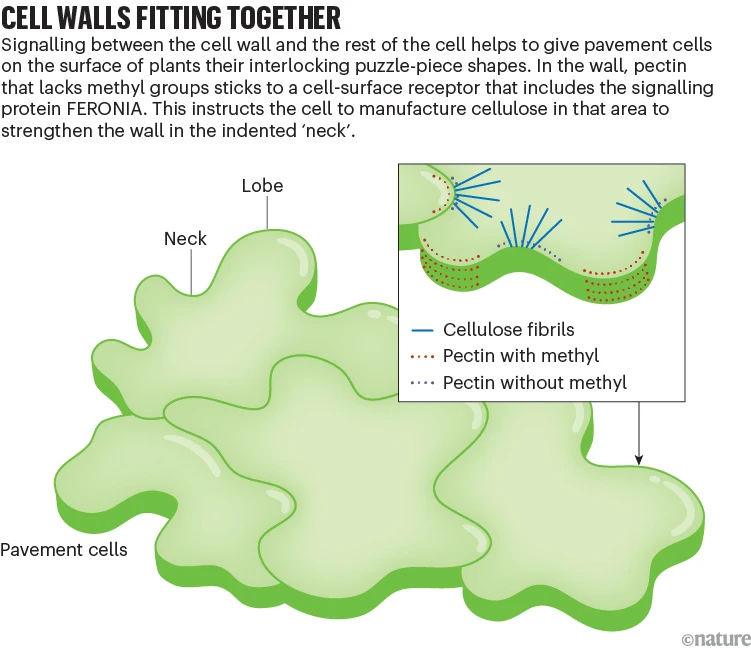
The FERONIA receptor, first studied in pavement cells, turns out to be involved in many vital functions across the plant. It helps maintain structural integrity, regulate root development, and coordinate stress responses. Plants lacking FERONIA survive, but only barely: their leaves crumple, stems collapse, and they struggle to produce seeds. Li-Jia Qu, a plant biologist at Peking University, envisions a future where understanding receptors like FERONIA could revolutionize agriculture.
His long-term goal is to use cell-wall signaling knowledge to hybridize distant plant species, potentially creating crops that can thrive in new climates or on previously infertile lands. By decoding how plants sense and respond to their walls, scientists could engineer stronger, more adaptable varieties — without resorting to genetic modification in the traditional sense.
A Living Legacy
Nearly four centuries after Hooke’s first glimpse of a cork cell, the plant wall has emerged as one of the most dynamic and intricate biological systems known. Once dismissed as lifeless scaffolding, it is now recognized as a powerful communicator, a defender, and a shaper of life itself.
As scientists continue to unravel the language of the cell wall — through pectin patterns, molecular receptors, and biochemical feedback loops — they are discovering new possibilities for food security, environmental resilience, and the future of sustainable agriculture. The cell wall, it turns out, is far from silent. It has been talking all along — and now, we’re finally learning how to listen.




Leave a Reply