
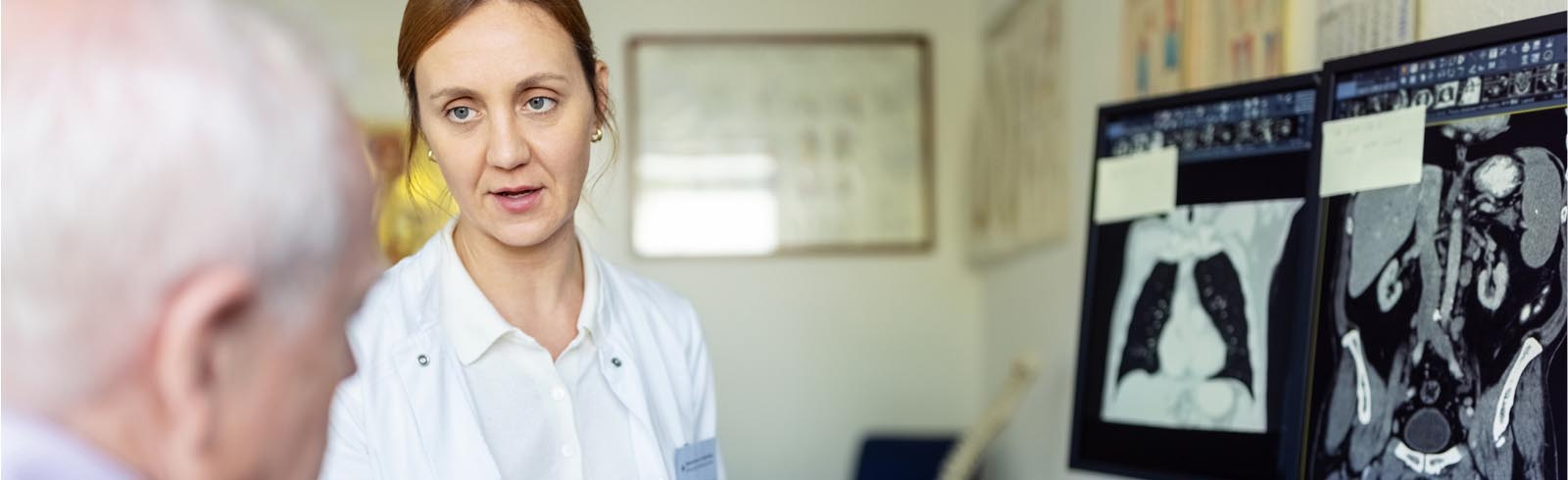
In the small Kansas town of Fredonia, family physician Jennifer McKenney manages a workload far broader than what most urban doctors experience. With the nearest gastroenterologist almost 90 miles away in Wichita, she performs colonoscopies herself. She oversees hospice and home health services for the community, and when emergencies arise, she has stepped in to deliver babies.
“We take on a lot,” McKenney said, reflecting on the realities of rural medical practice. “We aren’t only seeing patients in an exam room. We’re also the emergency doctors, hospital physicians, nursing home doctors. We have to be resilient, resourceful, and creative.”
Yet even the most adaptable physicians cannot replace every specialty or diagnostic service. McKenney often sees patients wait months just to see a neurologist, a delay that becomes a barrier to timely care. She recently joined a webinar hosted by the National Academies’ Forum on Advancing Diagnostic Excellence, where experts discussed both the challenges and promising initiatives shaping diagnostic care in rural America.
A Complex Landscape of Barriers and Strengths
One in five Americans lives in a rural area, and these communities face significantly higher mortality rates from chronic diseases such as cancer, heart disease, and stroke. According to the Centers for Disease Control and Prevention, limited access to care is one of the driving factors.
“Rural isn’t just a smaller version of urban,” said Meggan Grant-Nierman, a primary care physician in rural Colorado. She described how every rural setting has its own cultural and economic identity, but they commonly face shortages of clinicians and a thin network of health and human service providers.
Financial instability continues to threaten rural hospitals. Residents often travel long distances for specialty appointments or mental health care and rely heavily on Medicaid, Medicare, and the Children’s Health Insurance Program. The workforce issue is particularly severe in diagnostic fields like radiology, where rural availability is shrinking rapidly. As a result, communities increasingly depend on nurse practitioners and physician associates to fill critical gaps.
Grant-Nierman emphasized the extraordinary range of duties rural clinicians shoulder. “It’s not unusual to perform a C-section in the morning, manage a neonatal transfer at lunchtime, admit a patient with a new cardiac issue in the evening, and still see 15 to 20 clinic patients throughout the day.”
Despite these difficulties, some aspects of rural practice offer clear advantages. Mark Deutchman, a physician who spent years in rural Washington, explained that clinicians with wide-ranging responsibilities often deliver more integrated and less fragmented care. This continuity improves transitions between inpatient treatment, rehabilitation, and outpatient follow-up — a model worth preserving in diagnostic reform efforts.
Deutchman and others also highlighted the value of deep personal familiarity with patients. “I understood the environmental factors and daily constraints my patients lived with because I lived with them too,” he said. This intimate knowledge can improve clinical judgment in ways that larger systems cannot replicate.
Hospital leader Kevin Stansbury, from Hugo, Colorado, echoed this sentiment: “We know our patients. They’re our neighbors. Our kids go to school together. That level of connection matters.”
Why Better Diagnosis Begins With Better Access
Speakers repeatedly emphasized that diagnostic improvements hinge on expanding access to primary care.
“Supporting diagnostic excellence in rural areas starts with reliable access to primary care,” said Matthew Probst, a physician associate with the University of New Mexico’s Office for Community Health. He described a hub-and-spoke care model now operating across rural New Mexico.
School-based health centers function as hubs, while frontier schools serve as spoke sites using available spaces such as nurses’ rooms or repurposed classrooms. Care is delivered through community health workers, virtual exam tools, and connections to medical and mental health specialists. Services are generally available to students, staff, families, and often the broader community.
“In many towns, there simply are no other health care services,” Probst noted. The model, currently consisting of three hubs and 24 spoke sites, has produced strong results in clinical quality, access, and patient satisfaction. A new grant will expand the system to senior centers and explore adding specialty services.
Another major effort is emerging from Duke University School of Medicine and Mission Mobile Medical. Researcher Emily D’Agostino described an ARPA-H initiative that aims to bring hospital-level diagnostic and specialty care directly to remote regions through MARCUS — mobile medical units built on electric vehicles capable of navigating difficult terrain.
Each MARCUS unit carries swappable modules for different types of care. One can deliver wound treatment, others chemotherapy, maternal care, mammography, or cancer screening. Regional “mission stations” would serve as home bases, with vehicles rotating to areas of need. Communities could rent the vehicles with the medical modules that best match their local requirements. D’Agostino noted that this model could provide much faster diagnostic access than traditional referral systems.
Technology’s Expanding Role — and Its Limits
Telehealth has dramatically expanded access to specialty diagnosis in rural areas. Vida Passero of the U.S. Department of Veterans Affairs explained that remote care now helps provide oncology services to nearly 28,000 veterans across the country, many of them far from VA medical centers.
Telehealth also strengthens the rural workforce. “When clinicians feel supported and confident in the care they can provide, they tend to stay longer,” Deutchman said.
However, challenges remain. Uneven broadband access and inconsistent insurance coverage restrict telehealth’s reach, Grant-Nierman warned.
Some rural residents are turning to newer technologies like artificial intelligence. Patient advocate Sue Sheridan, who lives in rural Idaho, shared how an AI chatbot suggested Bell’s palsy as the likely explanation for her symptoms after a hospital clinician dismissed them as stress. With information from ChatGPT about the short treatment window, Sheridan sought a second opinion at a small rural hospital, where she immediately received the correct diagnosis and treatment.
Despite these technological gains, experts stressed that hands-on evaluation remains essential. Nurse practitioner Lyn Behnke reminded clinicians of the irreplaceable importance of physical exams. “Your best diagnostic tools are your hands,” she said. “You have to touch patients, listen to their hearts and lungs, and truly examine them.”
Building Healthy Communities Beyond the Clinic
Speakers agreed that long-term improvements require broader investments in rural communities themselves.
“We need resources not just for the machines or clinicians, but for the people and towns providing the care,” McKenney said. She emphasized that community well-being is inseparable from diagnostic quality.
Obstetrician Johnna Nynas of Sanford Health, who leads a maternal diagnosis initiative in rural Minnesota, echoed that perspective. “We can bring every tool and provider into these communities, but without access to healthy food, safe water, health education, and a clear path to primary care, our diagnostic impact will always be limited.”
Her message reflects a core truth: improving rural diagnosis is not simply a medical challenge — it is a community-building effort. From school-based clinics to mobile medical units and telehealth innovations, rural America is working toward a future where geography no longer dictates the quality of care.



Leave a Reply