

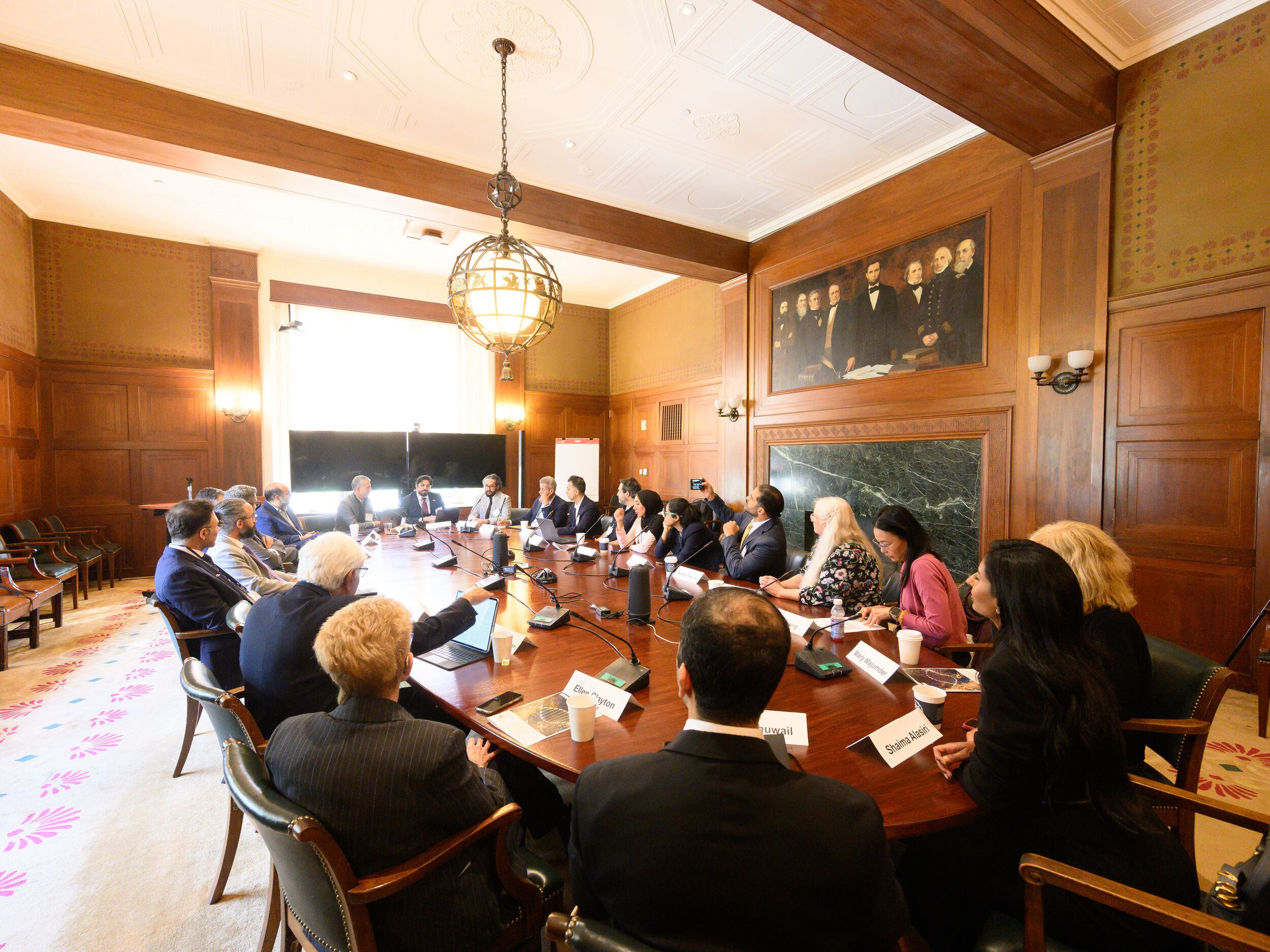
Emerging technologies such as genomics, artificial intelligence, and data-driven clinical tools are reshaping the future of global health care, enabling more accurate diagnoses, more personalized treatments, and improved long-term outcomes. Reflecting this rapid evolution, the National Academies of Sciences, Engineering, and Medicine partnered with the Kuwait Foundation for the Advancement of Sciences (KFAS) to host a recent workshop in Washington, D.C., focused on the expanding frontier of precision medicine. The event is part of an ongoing series designed to deepen scientific exchange between the United States and Kuwait and to highlight the latest breakthroughs transforming modern medicine.
During the opening session, Sheikha Al-Zain Al-Sabah, Kuwait’s ambassador to the United States, emphasized the significance of the partnership, noting that the collaboration between KFAS and the National Academies demonstrates how science diplomacy can meaningfully benefit society.
Throughout the workshop, participants engaged in expert panel discussions, collaborative breakout sessions, and open roundtables examining the rapidly growing field of translational precision medicine. These sessions explored developments in areas such as genomic diagnostics, AI-powered clinical tools, and innovative approaches to personalized treatment design. Between formal discussions, researchers also had opportunities to network, exchange ideas, and build professional connections. At an evening reception, Victor Dzau, president of the National Academy of Medicine, addressed participants and praised the expanding partnerships linking the United States with scientific communities across the Gulf region.
Joshua Sharfstein of the Johns Hopkins Bloomberg School of Public Health, also a member of the National Academy of Medicine, highlighted the lasting value of these events. He noted that workshops of this kind help participants identify practical strategies for advancing precision medicine while also inspiring new collaborative research efforts.
The Washington, D.C. gathering followed the momentum of the inaugural workshop held in February 2025, when KFAS hosted experts from Kuwait, the United States, and neighboring countries in Kuwait City. That earlier event focused on state-of-the-art point-of-care technologies, the expanding role of AI in personalized health solutions, and emerging discoveries in chronic metabolic disorders. Attendees also exchanged ideas on how to strengthen cross-border partnerships within the Gulf region and beyond.
Reflecting on the impact of the workshop series, Dari Alhuwail of Kuwait University observed that the events underscore a central truth: scientific progress transcends borders. He noted that the series has not only enabled knowledge sharing but has also built essential connections among researchers, helping create a shared vision for tackling complex global health challenges.
This series represents one part of a broader, long-term partnership between the National Academies and KFAS to engage in key scientific, engineering, and medical topics of mutual importance. Previous collaborations include a workshop series dedicated to promoting the inclusion of women in STEM fields, as well as KFAS’s sponsorship of two Arab-American Frontiers symposia in 2011 and 2018. Together, these initiatives continue to strengthen ties between the two nations while supporting research that aims to improve human health and scientific understanding worldwide.





Leave a Reply