
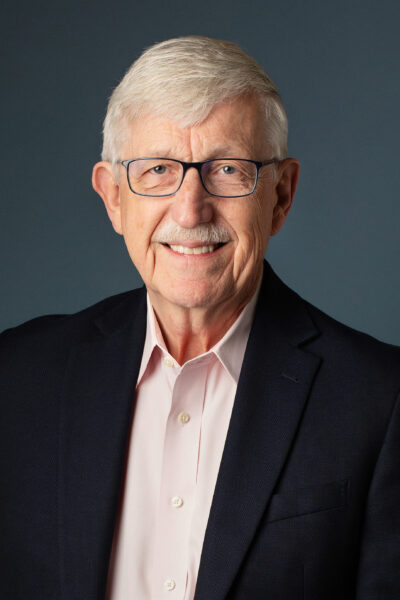
The National Academy of Sciences has announced that its 2026 Public Welfare Medal will be awarded to Francis S. Collins, former director of the U.S. National Institutes of Health, in recognition of his groundbreaking work in human genetics and his lasting contributions to public welfare. Collins is best known for leading the Human Genome Project, a scientific milestone that reshaped modern medicine and deepened global understanding of human disease. Over the course of his career, he has combined scientific excellence with public service, strengthening ethical standards in genetics, reinforcing public confidence in science, and helping guide national and international responses to major health challenges.
The Public Welfare Medal is the Academy’s highest honor, first established in 1914. It is awarded annually to individuals who have demonstrated exceptional use of science and scientific knowledge for the benefit of society. Collins’ career reflects the spirit of the award, uniting discovery, leadership, and a sustained commitment to improving human health.
In 1993, Collins became director of the National Center for Human Genome Research at the NIH, placing him at the helm of the Human Genome Project. At the time, the effort was one of the most ambitious scientific undertakings ever attempted, involving hundreds of researchers across multiple countries and dozens of sequencing centers. Collins played a central role in shaping how large-scale, international science could function effectively. He helped build a collaborative model that balanced bold scientific goals with technical rigor and ethical responsibility.
Under his leadership, the project developed sequencing strategies not only for humans but also for key model organisms, helping scientists better understand genetic function and disease. Collins also coordinated cooperation among international research teams, ensuring that progress remained shared rather than siloed. One of the most influential policies adopted during this period was the Bermuda Principles, which required genome sequence data to be released publicly on a daily basis. This unprecedented level of transparency accelerated discovery worldwide and set a new standard for openness in biomedical research.
Beyond the laboratory, Collins was instrumental in advancing legal protections related to genetics. He played an important role in the development of the Genetic Information Nondiscrimination Act, which safeguards individuals from discrimination based on their genetic information in employment and health insurance. Despite scientific, political, and financial pressures, the Human Genome Project reached its goal with the completion of the first full human genome sequence. This achievement transformed biomedical research, enabled the rise of precision medicine, and laid the foundation for new therapies targeting inherited and complex diseases alike.
Collins’ influence on public welfare did not end with the Human Genome Project. From 2009 to 2021, he served as director of the NIH, becoming the longest-serving person to hold the position. During this time, he worked under three U.S. presidential administrations, helping to stabilize and strengthen the nation’s biomedical research enterprise. His tenure coincided with multiple public health emergencies, including the Ebola outbreak and the COVID-19 pandemic, during which he played a key role in coordinating scientific responses and communicating with the public.
As NIH director, Collins championed major research initiatives across a wide range of fields. He expanded federal investment in Alzheimer’s disease research, launched the BRAIN Initiative to accelerate advances in neuroscience, and helped establish the Cancer Moonshot program to speed progress in cancer prevention, diagnosis, and treatment. He also led a major push toward precision health, including the creation of the All of Us Research Program, the largest long-term cohort study ever undertaken by the NIH, designed to reflect the diversity of the U.S. population and improve personalized care.
Following his time at NIH, Collins continued to serve in public leadership roles. From 2022 to 2023, he acted as a special advisor to the U.S. president, co-chairing the President’s Council of Advisors on Science and Technology. In that role, he helped advance a nationwide effort aimed at eliminating hepatitis C, further demonstrating his commitment to translating scientific knowledge into tangible public health outcomes.
Leaders of the National Academy of Sciences have praised Collins for both his scientific vision and his public service. Nancy Andrews, Home Secretary of the Academy, noted that his leadership of the Human Genome Project helped define how modern biomedical science is conducted. She emphasized that his career illustrates how sustained scientific leadership can deliver profound benefits to society. Academy President Marcia McNutt highlighted Collins’ ethical leadership and public engagement, describing his work as a powerful example of how scientific discovery can be applied in service of humanity.
Before assuming national leadership roles, Collins built an influential research career in human genetics. At the University of Michigan and later at the NIH, his laboratory pioneered the use of positional cloning to identify genes responsible for numerous inherited disorders. These included cystic fibrosis, neurofibromatosis, Huntington’s disease, multiple endocrine neoplasia, Alagille syndrome, and Hutchinson-Gilford progeria syndrome. His research also contributed to understanding complex conditions such as type 2 diabetes, establishing principles that continue to guide genetic and biomedical research worldwide.
Collins’ achievements have earned him widespread recognition. He is a member of both the National Academy of Sciences and the National Academy of Medicine and has received many of the highest honors in science and public service. These include the Presidential Medal of Freedom, the National Medal of Science, the Gairdner Foundation International Award, and the Templeton Prize. He has also been elected as a foreign member of the Royal Society in the United Kingdom, reflecting his global impact on science.
His academic training spans multiple disciplines. Collins earned a bachelor’s degree in chemistry from the University of Virginia, followed by a master’s degree and doctorate in physical chemistry from Yale University. He later completed a medical degree with honors at the University of North Carolina, where he also finished his residency and fellowship training. His early postdoctoral research at Yale, which focused on the molecular mechanisms behind persistent fetal hemoglobin, helped set the stage for his later breakthroughs in human genetics.
The Public Welfare Medal will be formally presented to Collins on April 26 at the National Academy of Sciences’ 163rd annual meeting. The award places him among a distinguished group of past recipients whose work has demonstrated the power of science to serve the public good.
Founded in 1863 under a congressional charter signed by President Abraham Lincoln, the National Academy of Sciences is a private, nonprofit institution dedicated to advancing scientific excellence. Alongside the National Academy of Engineering and the National Academy of Medicine, it provides independent advice on science, engineering, and health policy to the U.S. government and other organizations, while recognizing outstanding achievement through election to membership and prestigious awards such as the Public Welfare Medal.


Leave a Reply