
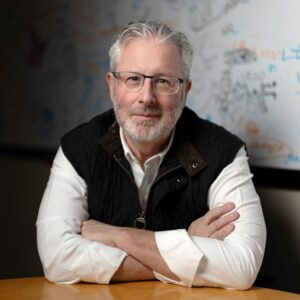
WASHINGTON — The National Academy of Sciences has selected Neil H. Shubin, the Robert R. Bensley Distinguished Service Professor of Organismal Biology and Anatomy and vice dean for academic advancement at the University of Chicago, as its next president. Shubin will assume the five-year role on July 1, taking over from Marcia McNutt, who has led the Academy since 2016.
In response to his election, Shubin expressed deep respect for the institution’s mission. He noted that the Academy’s long-standing tradition of providing objective, nonpartisan scientific guidance has never been more important, particularly as the nation faces complex challenges related to public health, national security, and technological advancement.
Shubin is widely recognized as a leading evolutionary biologist, researcher, and science communicator. At the University of Chicago, he directs an interdisciplinary laboratory that bridges molecular biology and paleontology. Over the course of his career, he has held academic and leadership positions at the University of Pennsylvania, the Marine Biological Laboratory in Woods Hole, Massachusetts, and Chicago’s Field Museum.
His work has taken him on scientific expeditions across the globe. One of his most notable achievements came in 2004, when his research team uncovered a groundbreaking fossil in Ellesmere Island, in Canada’s northern Nunavut territory. The discovery, later named Tiktaalik, revealed an intermediate form between fish and early land-dwelling vertebrates, offering key insights into how life transitioned from water to land.
In 2008, Shubin published Your Inner Fish, a widely praised book that explores human anatomy through the lens of evolutionary history. The work became a national bestseller and earned major honors, including the Phi Beta Kappa Award in Science and recognition from the National Academy of Sciences as the year’s top science book. The book was later adapted into a documentary miniseries for PBS in collaboration with the Howard Hughes Medical Institute, winning both an Emmy Award and the Academy’s communication prize for film and television. Shubin also developed and teaches a university course based on the book for students outside the biological sciences.
Current NAS President Marcia McNutt praised Shubin’s appointment, highlighting his passion for science education and his ability to communicate complex ideas to broad audiences. She said she was delighted to welcome him as her successor and confident in his leadership.
Shubin completed his undergraduate degree in biology at Columbia University in 1982 and earned his doctorate in organismic and evolutionary biology from Harvard University in 1987. He conducted postdoctoral research at the University of California, Berkeley. Over the years, he has received numerous accolades, including the Roy Chapman Andrews Society Distinguished Explorer Award in 2019 and the Viktor Hamburger Outstanding Educator Prize in 2024. He was elected to the National Academy of Sciences in 2011 and has served on multiple Academy committees.
In related leadership elections, Cherry Murray, the Benjamin Peirce Professor of Technology and Public Policy and emerita professor of physics at Harvard University, was chosen as the Academy’s new International Secretary. Murray has held influential roles in both U.S. and international science policy, including leading the U.S. Department of Energy Office of Science and serving in senior positions with United Nations scientific initiatives. She has also advised major research institutions in Singapore, Germany, and Japan. Her four-year term begins on July 1.
Four new council members were also elected to serve three-year terms on the NAS Council starting in July. They include Naomi J. Halas of Rice University, Susan Marqusee of the University of California, Berkeley, Diana C. Mutz of the University of Pennsylvania, and David A. Tirrell of the California Institute of Technology.
Founded in 1863 under a congressional charter signed by President Abraham Lincoln, the National Academy of Sciences is a private, nonprofit organization dedicated to advancing scientific knowledge and advising the U.S. government on issues related to science, engineering, and health. Membership in the Academy is considered one of the highest honors in the scientific community, with current membership including roughly 2,650 active U.S. scientists and 550 international members. Among them are 190 Nobel laureates.

Leave a Reply