
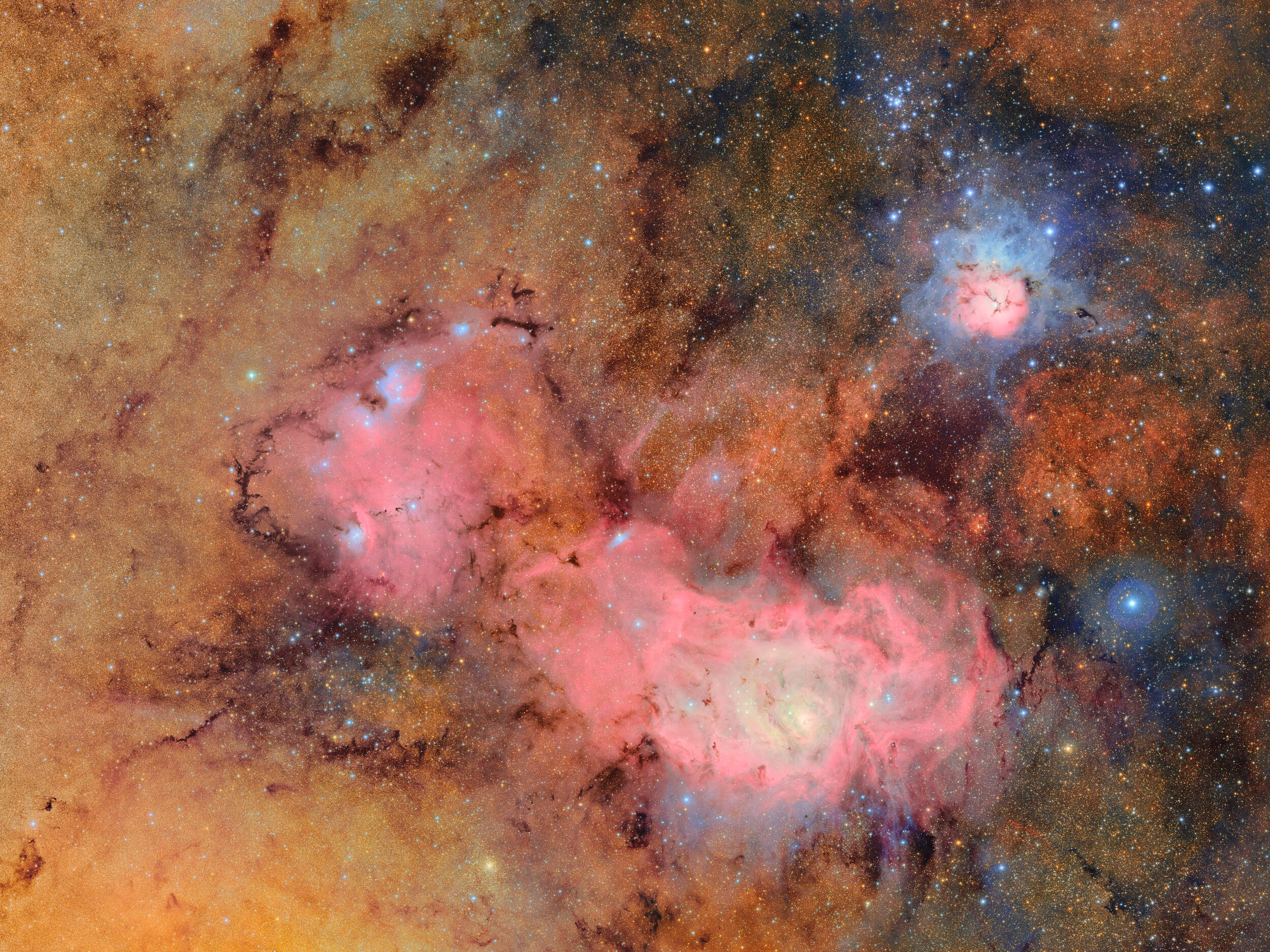
For the first time, scientists involved with the Vera C. Rubin Observatory unveiled an impressive collection of ultra-high-definition images and videos, highlighting both the observatory’s exploratory reach and precision capabilities. The “First Look” event, held yesterday at the National Academy of Sciences in Washington, D.C., offered audiences sweeping views of the cosmos, detailed imagery of nebulae, and a record of 2,100 newly identified asteroids.
The Vera C. Rubin Observatory is a collaborative effort between the U.S. Department of Energy and the National Science Foundation. Constructed atop a mountain in northern Chile, it benefits from exceptionally clear skies and minimal light pollution. Over the next decade, the observatory will conduct an ambitious survey, scanning the entire night sky of the Southern Hemisphere every three to four days. This will provide astronomers worldwide with an unparalleled view of the universe and a vast repository of astronomical and cosmological data.
Equipped with the world’s largest digital camera, the observatory is designed to deepen our understanding of the cosmos, track its evolution, and probe some of its greatest mysteries, including dark energy and dark matter. Its construction followed recommendations from the 2010 decadal survey conducted by the National Academies.
“It is incredibly rewarding to see the National Academies’ recommendation come to life through the dedication of scientists and engineers, supported by federal science funding,” said Arul Mozhi, acting director of the Space Studies Board and Board on Physics and Astronomy at the National Academies. “The First Look images and discoveries from the Vera C. Rubin Observatory are breathtaking and will continue to inspire both current and future generations of scientists.”
The observatory is named after Vera C. Rubin, a trailblazing astronomer and member of the National Academy of Sciences. Her groundbreaking work provided some of the most compelling evidence for the existence of dark matter, reshaping our understanding of the universe.





Leave a Reply